Nvidia pushes back as Trump administration weighs tighter AI chip export controls
The chipmaker's CEO wants Washington to loosen restrictions on GPU sales abroad, but the new administration is considering using chip access as leverage in trade negotiations.
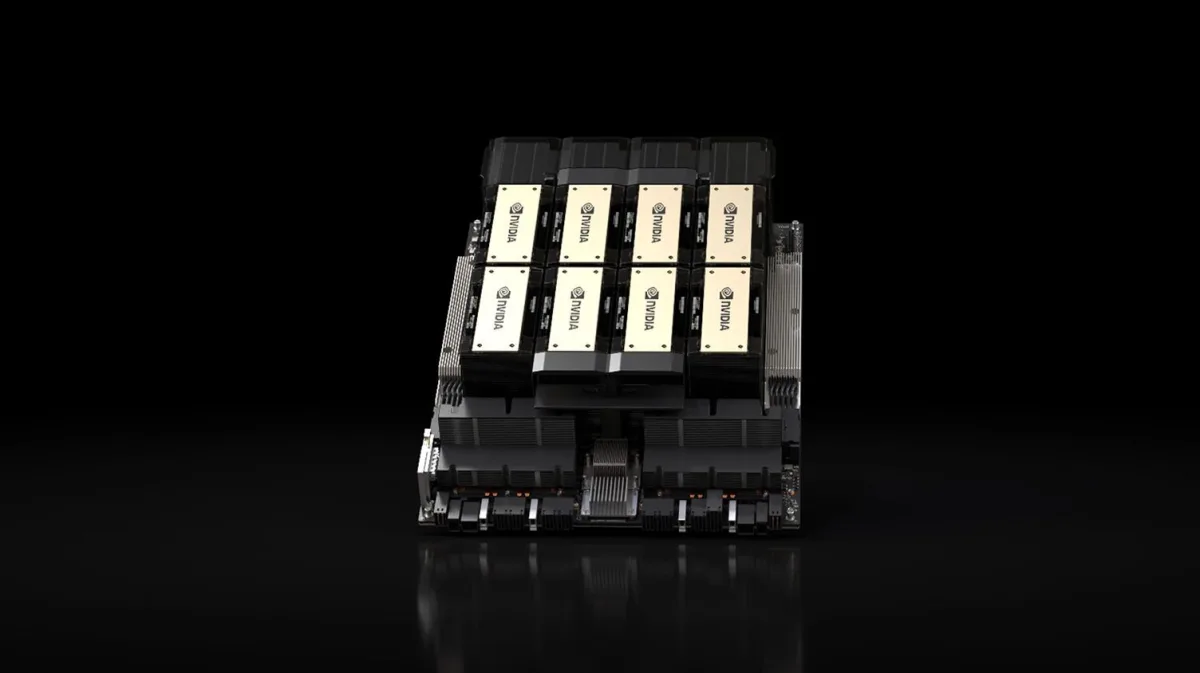
Semiconductors could become tools for diplomatic leverage in international commerce.
Jensen Huang, chief executive of Nvidia, has renewed his plea for the U.S. government to relax restrictions on exporting artificial intelligence processors, contending that current rules prevent American technology firms from competing effectively on the world stage, according to reporting by Bloomberg. The incoming administration, however, appears to take a different view, signaling its intention to impose stricter limits on AI GPU shipments as a means to gain negotiating power in bilateral trade discussions, according to Reuters.
I am not sure what the new AI Diffusion Rule is going to be, but whatever happens to be, it it really has to recognize that the world has changed fundamentally since the previous AI diffusion rule was was released. We need to accelerate the diffusion of American AI technology around the world, so the policies and encouragement from the administration really need to be behind that.
Jensen Huang, speaking at the Hill and Valley Forum
The Biden administration's AI Diffusion framework established a tiered system for chip distribution. Corporations headquartered in the United States and 18 allied "Tier 1" nations face no restrictions on acquiring advanced processors like Nvidia's H100. Companies in "Tier 2" nations operate under annual caps of approximately 50,000 H100-class units, though they may purchase up to 1,700 units yearly without an export license, and these smaller transactions do not count against the national ceiling. Nations subject to arms sanctions—designated "Tier 3," encompassing China, Russia, and Macau—are largely prohibited from receiving shipments of cutting-edge AI processors. The Trump administration is now reassessing this framework to strengthen its clarity and implementation.
Nvidia has voiced opposition to Biden's AI Diffusion Rule, maintaining that limiting American GPU exports will accelerate the creation and spread of rival technologies and architectures, particularly those originating from China. Huang and the company have been pushing for policy modifications. While the Trump administration acknowledges that revisions are warranted, the direction of those changes may diverge significantly from what Nvidia and comparable American hardware manufacturers seek.
The administration's contemplated modifications would scrap the tiered framework in favor of a worldwide licensing system built on bilateral governmental agreements. This approach would permit the U.S. to determine chip access individually, strengthening American negotiating positions in trade talks. Policymakers are also examining whether to reduce the quantity of chips exportable without formal authorization. Today, shipments under 1,700 H100-class units require only notification; officials are considering lowering this figure to 500 units.
Wilbur Ross, who served as Secretary of Commerce under the previous administration, acknowledged that this strategy is under review, though Reuters notes that no final determinations have been made.
Should these regulations take effect, Nvidia's market performance would hinge not solely on the technical merit and efficiency of its products, but on trade agreements brokered between Washington and foreign governments. Certain nations might find China's Huawei an appealing alternative, given how closely it rivals Nvidia in capability.
China is not behind anybody, China is right behind us, we are very, very close. There is no question that Huawei is one of the most formidable technology companies in the world, and they are incredible in computing, they are incredible in networking technology, and in software capabilities, all of the essential capabilities to advance AI. And they have they've made enormous progress in the last several years.
Jensen Huang
Source: Tom's Hardware