Nintendo's ROM Chip Supplier Macronix Exits Gaming Market for AI Data Center Focus
Macronix, a major manufacturer of memory chips for Nintendo Switch cartridges, is phasing out its ROM business to redirect production capacity toward NOR and NAND flash chips demanded by artificial intelligence data centers.
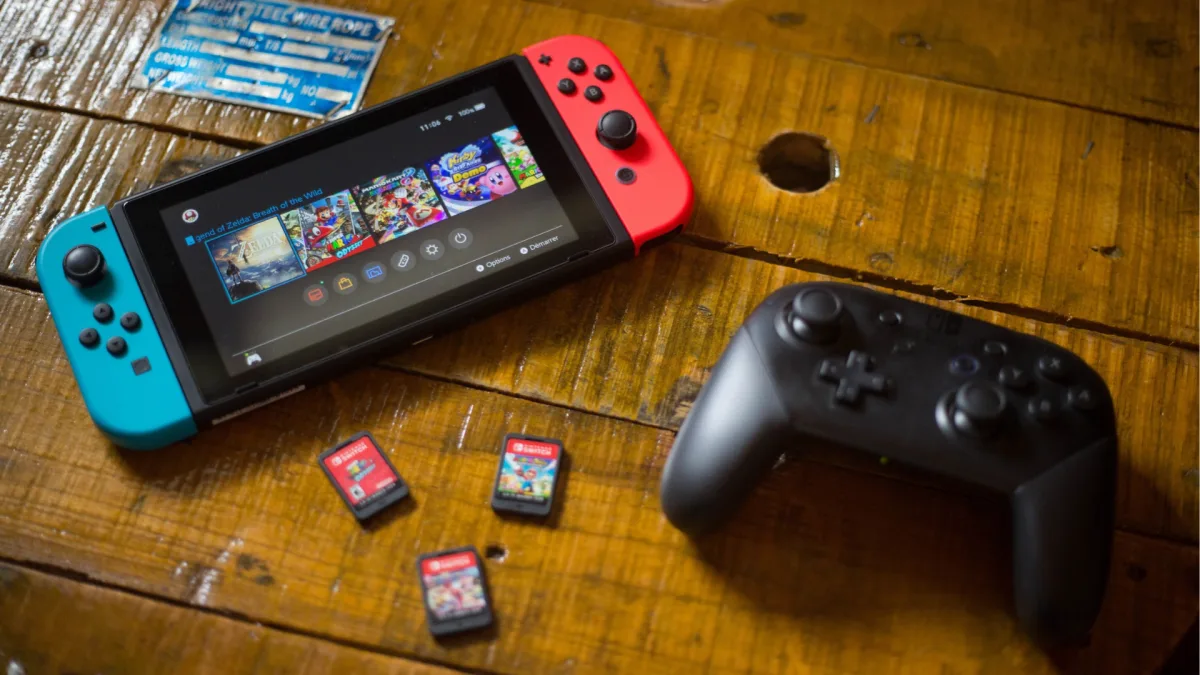
The shift away from physical game media may be accelerating as Macronix, a significant supplier of ROM chips for Nintendo Switch and Switch 2 cartridges, winds down its gaming memory business to concentrate on producing NOR and NAND flash chips for data center applications. The move could put pressure on Nintendo to raise prices for physical game cartridges, expand its Game-Key card offerings, or push customers toward digital distribution channels.
According to analyst David Gibson at MST Financial, "Nintendo's main memory chip maker is quitting the Switch business. Macronix, which makes the ROM chips in Switch 1 and Switch 2 game memory cards, is phasing out that business. There will be no new ROM products, and Q3 is the last quarter it reports ROM sales separately." Macronix's ROM revenue fell to 5% of its business in the third quarter, down from 26% a year earlier, Gibson reported on X. The company is directing its entire NT$37.8 billion capital expenditure toward NOR and NAND flash production, with no allocation remaining for ROM manufacturing. The Taipei Times confirmed the shift, noting that Macronix's spending plan includes NT$22 billion for manufacturing expansion and an additional NT$15.8 billion for NAND flash used in eMMCs and 3D NAND applications.
Gibson projects that Nintendo's profit margins on digital sales will grow through increased Game-Key card sales and digital-only releases, but he cautioned that "physical cards will likely carry on for some time" because Macronix is not Nintendo's exclusive ROM supplier. Digital margins have been climbing gradually, though quarterly fluctuations occur around major physical game launches.
ROHM Semiconductor and LAPIS Semiconductor, both part of the ROHM group, continue supplying ROM chips to Nintendo, making an immediate transition to digital-only distribution unlikely in the near term. Nonetheless, losing one supplier could force Nintendo to raise physical game prices. The company is unlikely to follow Sony and Microsoft into digital-exclusive strategies in the foreseeable future.
The biggest casualty may be fabless chip designer MegaChips, which occupies a critical position in the supply chain. Nintendo does not purchase ROM chips from Macronix directly; instead, MegaChips designs the chips to Nintendo's specifications and outsources manufacturing to Macronix, which lacks its own fabrication facilities. According to MegaChips' 2022 annual report, Nintendo represented 87.8% of the company's revenue, while Macronix accounted for 67.8% of its outsourced manufacturing. The same report warned that if Macronix ceased ROM production, "MegaChips' operating results may be impacted." At the time, the company saw no indication the risk would materialize, but circumstances have now changed dramatically. MegaChips' contingency strategy remains unclear, though the two companies have likely discussed Macronix's exit plans and negotiated a transition timeline to allow MegaChips to secure alternative manufacturing partners before production stops entirely.