NASA Reverses Course on Propellant Depots as Space Industry Shifts
Marshall Space Flight Center has begun openly developing cryogenic propellant management technology in orbit—work that was previously suppressed for a decade to protect the Space Launch System program.
A significant policy shift is underway at NASA's Marshall Space Flight Center in Huntsville, Alabama. The center recently announced progress on technology designed to manage cryogenic propellants during spaceflight, marking a dramatic reversal from a decade-long period when such research was actively discouraged. The change comes after the retirement of U.S. Senator Richard Shelby, the Alabama Republican who had previously blocked work in this area to safeguard the Space Launch System.
Teams at Marshall have been testing methods to achieve zero boiloff storage of liquid hydrogen through dual-stage active cooling systems, an approach that could preserve valuable propellant during extended missions. "Technologies for reducing propellant loss must be implemented for successful long-duration missions to deep space like the Moon and Mars," stated Kathy Henkel, acting manager of NASA's Cryogenic Fluid Management Portfolio Project, based at NASA Marshall.
The irony is substantial. Long-term storage of liquid propellants including oxygen, hydrogen, and methane forms the foundation of reusable launch vehicle strategies at SpaceX, Blue Origin, and other commercial spaceflight companies. Yet NASA had suppressed this research for years. As previously documented, Shelby directed the agency to halt work on cryogenic propellant storage and transfer, reportedly threatening to dismiss anyone who used the word "depot."
Other Launch Industry Developments
Australian Rocket Fails on First Flight
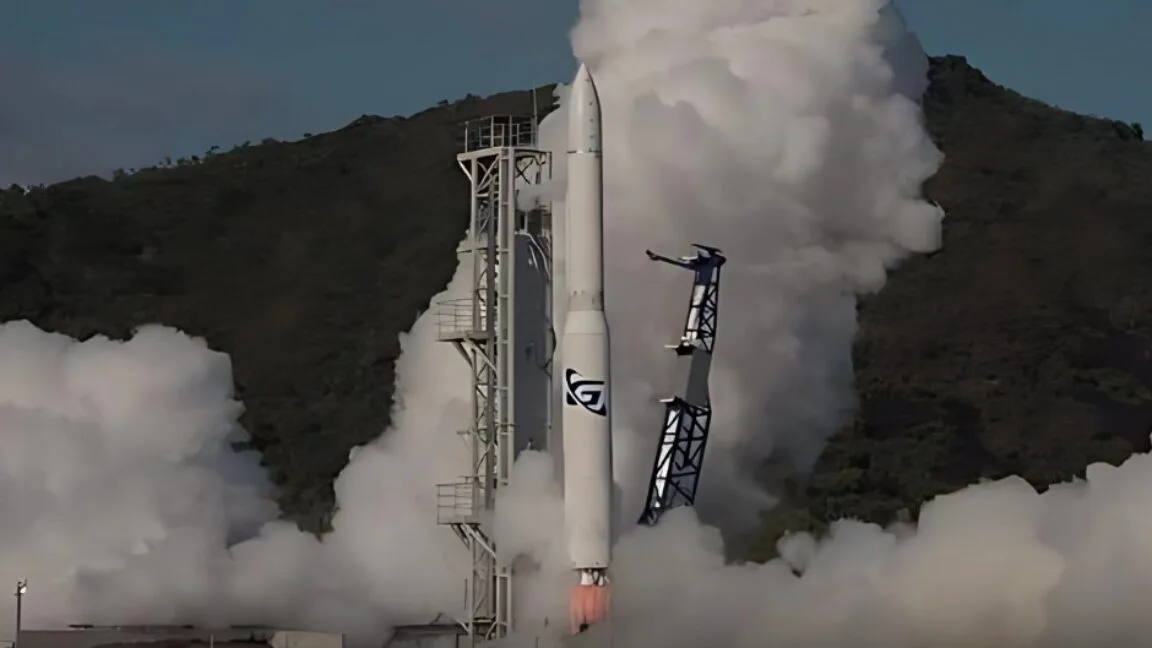
An Australian-developed launch vehicle experienced a catastrophic failure during its inaugural test flight. The 82-foot-tall Eris rocket, built by Gilmour Space, ignited its four main engines and lifted off from a launch pad in northeastern Australia on Tuesday but lost thrust from two engines within seconds. The vehicle stalled above the pad and fell into a nearby field, generating a towering smoke plume visible for miles.
Gilmour Space reported no injuries or environmental damage, and the launch pad sustained no significant harm. The flight lasted 14 seconds. Company cofounder and CEO Adam Gilmour told Ars Technica that the outcome aligned with his expectations. "I didn't expect that we would get to orbit," he said. "Never did. I thought best case was maybe 40 seconds of flight time, but I'll take 14 as a win."
Firefly Aerospace Pursues Public Markets
Firefly Aerospace has filed with the Securities and Exchange Commission to raise more than $600 million through an initial public offering. The company plans to sell 16.2 million shares at a price between $35 and $39 per share, which could yield up to $631.8 million and value the company at approximately $5.5 billion.
The timing follows Firefly's March achievement when its Blue Ghost lander successfully touched down on the lunar surface. The company intends to use IPO proceeds to retire substantial debt, support dividend payments, and cover general corporate expenses. These expenses include development of the Eclipse medium-class rocket, being built in partnership with Northrop Grumman, which invested $50 million in Firefly in May. The company is also developing Elytra, a spacecraft platform designed to carry military sensors and other payloads while maneuvering them into different orbits.
Air Force Advances Next-Generation ICBM
The U.S. Air Force announced successful testing of the second stage motor for the LGM-35 Sentinel, a next-generation intercontinental ballistic missile being developed by Northrop Grumman. The test took place in a vacuum chamber simulating high-altitude conditions. The Sentinel, awarded to Northrop Grumman as a sole-source contract five years ago, will carry thermonuclear warheads and is intended to replace all 450 Minuteman III missiles beginning in 2029.
"This test reflects our disciplined digital engineering approach and the continued momentum behind the Sentinel program," said Brig. Gen. William S. Rogers of the Air Force. The stage-two motor is one of three booster segments in the three-stage missile. Testing is part of a series designed to validate the stage-two design and confirm predictive performance models developed through digital engineering. Data from the test will refine design elements and reduce technical risk as the program moves toward production. A stage-one motor test was conducted in March at Northrop Grumman's Promontory, Utah facility.
SpaceX Bahamas Landing Deal Faces Uncertainty
SpaceX's agreement with the Bahamas to land Falcon 9 first stages on the islands remains under review following the April explosion of a Starship rocket. The deal, signed in February by Deputy Prime Minister Chester Cooper, provided SpaceX with a more efficient launch pathway but has become controversial.
According to Reuters reporting, the rapid approval created internal government tensions, with some officials questioning the lack of transparency in negotiations. The agreement included a $1 million donation to the University of Bahamas, where SpaceX committed to conducting quarterly seminars on space and engineering. SpaceX also agreed to pay a $100,000 fee per landing. When Starship failed mid-flight in April, hundreds of debris pieces washed ashore on Bahamian islands. Local activists have since intensified criticism of the Falcon 9 landing arrangement.
Weather Delays Crew Dragon Launch
SpaceX's Crew-11 mission was scrubbed with less than two minutes remaining before the scheduled launch Thursday when unexpected cumulus clouds appeared at the launch site. The four astronauts, led by NASA's Zena Cardman, are scheduled to travel to the International Space Station aboard the Crew Dragon Endeavour spacecraft.
The 45th Weather Squadron had forecast a 90 percent probability of acceptable launch conditions on Wednesday, with meteorologists assessing a low likelihood of cumulus cloud interference. The unexpected cloud formation prevented the launch attempt. Another attempt was planned for Friday, though forecasters predicted somewhat degraded weather conditions.
European Company Tests Advanced Rocket Engine
The Exploration Company has completed a six-week testing campaign of the oxygen-rich preburner for its Typhoon rocket engine, with co-financing from the French space agency CNES. Development of the Typhoon began in January 2024. The reusable engine employs a full-flow staged combustion cycle and is designed to generate 250 metric tons of thrust, comparable to SpaceX's Raptor engine. On Thursday, the company announced completion of 16 hot-fire tests of the oxygen-rich preburner.
The Typhoon engine currently lacks a confirmed application, as its power level exceeds the requirements of The Exploration Company's existing in-space logistics projects. According to information provided to European Spaceflight, the company partnered with an industrial prime contractor to submit a proposal for the European Space Agency's European Launcher Challenge. While unconfirmed, the Typhoon engine likely forms part of that bid.
NASA-ISRO Satellite Reaches Orbit
A $1.5 billion synthetic aperture radar imaging satellite developed jointly by NASA and India's space agency ISRO successfully launched Wednesday aboard India's Geosynchronous Satellite Launch Vehicle. The NISAR (NASA-ISRO Synthetic Aperture Radar) mission deployed into a Sun-synchronous orbit 464 miles above Earth's surface. From this vantage point, it will collect data on the planet's land and ice surfaces twice every 12 days.
The spacecraft will undergo a three-month commissioning phase following launch. NISAR represents the largest collaboration to date between NASA and ISRO in terms of complexity and cost. Earth observation missions typically cost less than deep-space missions because they do not require hardening for extended flight beyond Earth orbit. This partnership could establish a template for expanded cooperation between the agencies in support of the Artemis program and other initiatives.
Smithsonian Displays SpaceX Hardware
The National Air and Space Museum opened five renovated galleries to the public Monday, including two dedicated to spaceflight artifacts. The new exhibitions present contemporary perspectives on returning displays while honoring the museum's nearly 50-year tradition of acquiring objects that shaped history.
Artifacts debuting in the "Futures in Space" exhibition include a Merlin engine and grid fin from a SpaceX Falcon 9 rocket, the pressure suit worn by Sian Proctor during the private Inspiration4 mission in 2021, and a mockup of a Blue Origin New Shepard crew module. Blue Origin has pledged to replace the mockup with an actual flown capsule once it retires from service. The Falcon 9 booster, though still operational, holds the distinction of being the most-flown U.S. rocket in history, and its Merlin engine ranks as the most reliable rocket engine across that timeframe.
Think Tank Calls for SLS Cancellation
The Reason Foundation, a libertarian think tank, released a report sharply criticizing NASA's Artemis program and its reliance on the Space Launch System rocket and Orion spacecraft. "NASA needs to bite the bullet and end its use of obsolete, non-reusable launch vehicles and sole-source, cost-plus contracts," the report states. "It should shift to state-of-the-art reusable spacecraft and public-private partnerships like those now transporting cargo and people between Earth and the International Space Station."
The report estimates that canceling the SLS rocket, its ground infrastructure, Orion, and the Lunar Gateway would save NASA $5.25 billion annually. The authors propose multiple lunar lander architectures that would be ready sooner and compatible with existing rockets, including a novel approach using Crew Dragon equipped with landing legs. The report's practical impact remains uncertain, as Congress appears committed to continuing SLS flights, while the Trump administration has indicated interest in canceling the rocket after two additional missions.
Upcoming Launches
- August 1: Falcon 9 | Crew-11 | Kennedy Space Center, Florida | 15:43 UTC
- August 2: Electron | JAKE 4 suborbital flight | Wallops Flight Facility, Virginia | 01:45 UTC
- August 4: Falcon 9 | Starlink 10-30 | Cape Canaveral Space Force Station, Florida | 04:11 UTC
Source: Ars Technica