Musk's Terafab Secures Expedited Chip Equipment Deliveries as Texas Fab Targets 2028 Production
Elon Musk announced that ASML and other semiconductor equipment makers are accelerating shipments to Terafab, the joint Tesla-SpaceX chip manufacturing venture, to meet an ambitious timeline for volume production in Texas by late 2028.
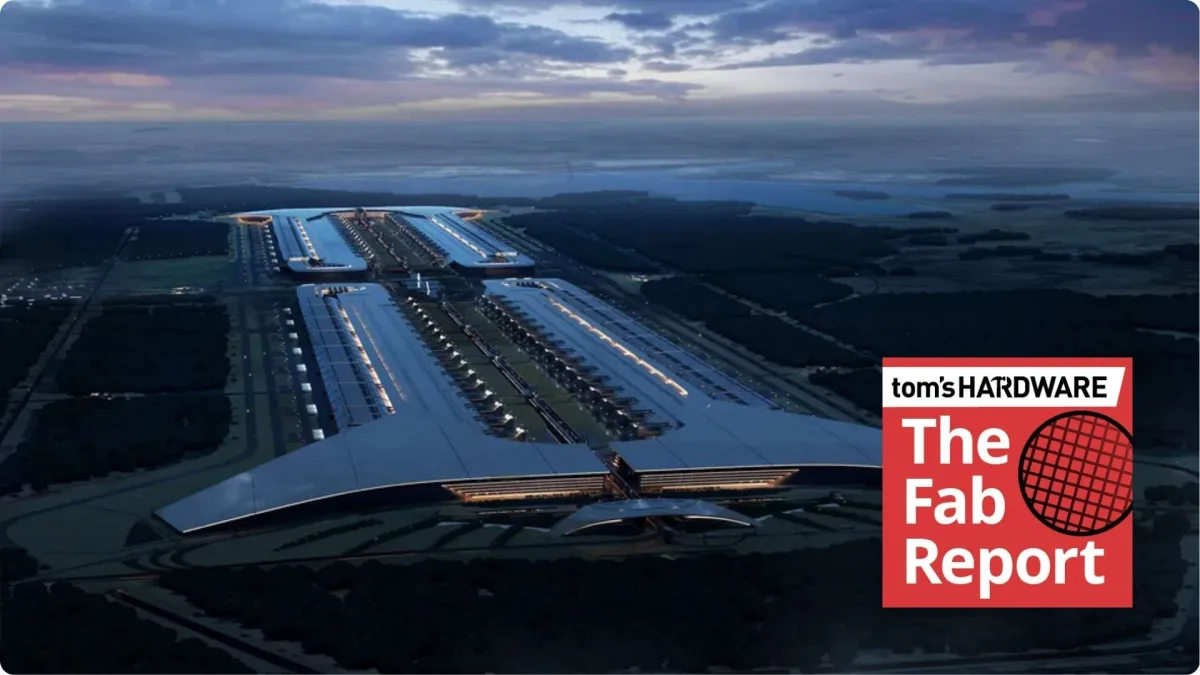
During SpaceX's Q3 2026 earnings broadcast on X on October 20, Elon Musk revealed that major semiconductor equipment suppliers have agreed to speed up deliveries to Terafab, the ambitious chip fabrication project jointly pursued by Tesla and SpaceX. Musk, who leads both companies backing the venture, emphasized the aggressive nature of the undertaking while acknowledging significant uncertainty in the timeline.
The primary manufacturing facility in Gibbons Creek, Texas is targeted to begin volume chip production in the third or fourth quarter of 2028, though Musk cautioned that these dates carry "big error bars." SpaceX plans to produce its first experimental test chip at a research fabrication facility in Austin, Texas, around the second quarter of 2027.
These are very aggressive dates, and we're very appreciative of ASML and all of our other suppliers in accelerating equipment deliveries in order to achieve this outcome
Elon Musk
AI Compute Expansion and Vera Rubin Cluster
Beyond Terafab, Musk outlined expansion plans for his artificial intelligence operations during the same broadcast. He expects his AI companies to have between 2.5 and 3 gigawatts of computing capacity operational by the close of 2026, with confidence in deploying an additional 10 GW throughout 2027. Musk stated he "would be surprised" if the combined total does not reach 13 GW by the end of 2027.
To achieve this 13 GW milestone, SpaceX and xAI are aggressively acquiring next-generation NVIDIA processors. Musk announced plans to bring a 440,000-GPU NVIDIA "Vera Rubin" training cluster online by the end of the second quarter of 2027. This timeline significantly outpaces competing projects: the restructured 10 GW Project Stargate is expected to reach full capacity in the 2030s, while Meta's 5 GW Hyperion project follows a similar trajectory.
Terafab's Scope and Supply Chain
Terafab represents a vertically integrated semiconductor manufacturing complex designed to produce logic, memory, and advanced packaging architectures under one roof. The facility aims to manufacture 1 terawatt of AI computing power annually once fully operational. Musk claimed that the commercial value of Terafab's advanced chip output, when scaled, would rank it among the top 20 global country GDPs by economic output—a comparison to Switzerland's approximately $1.14 trillion GDP.
The project will employ extreme ultraviolet lithography systems based on Intel's 14A manufacturing node technology. Intel formally joined the Terafab venture in April 2026 to co-develop and refactor silicon fabrication technology, providing access to its advanced 14A process. ASML, the world's sole commercial supplier of the $400 million EUV lithography systems essential for high-volume leading-edge chip production, serves as perhaps the project's most critical partner. Unofficial sources indicated Terafab's first EUV tool was scheduled for delivery in mid-2027, though it remains uncertain whether this represents the expedited timeline Musk referenced.
Additional major suppliers include American equipment manufacturers Applied Materials, Lam Research, and KLA Corporation, along with Japan's Tokyo Electron, which will provide front-end processing, metrology, and process control equipment. Tesla and SpaceX are also negotiating with approximately 10 South Korean equipment makers, including Hanmi Semiconductor, known for advanced packaging equipment, and HPSP, a high-pressure hydrogen annealing equipment manufacturer, plus firms supplying specialized piping components and process valves.
Strategic Purpose and Skepticism
Terafab is designed to address potential future shortages of cutting-edge AI processors from external foundries such as TSMC. The facility will supply chips for Musk's xAI clusters, self-driving vehicles, Optimus humanoid robots, SpaceX's orbital AI data center, and the broader artificial intelligence industry. Musk's announcement indicates that several suppliers are expediting deliveries to Terafab despite tight capacity across the global semiconductor supply chain.
However, numerous industry experts have cast doubt on the feasibility of Terafab's 1 TW production ambition. Research firm Gartner estimates total global AI-optimized data center capacity at roughly 44 GW as of late 2026—just 4.4 percent of Terafab's planned annual output. While global AI computing capacity has expanded at a rate of approximately 3.3x to 3.4x annually since 2022, according to EpochAI, the scale of Terafab's stated goals remains substantially ahead of current industry trajectories.