Infor Targets AI Hallucinations With Industry-Specific Agents
Infor is building AI agents tailored to particular sectors to reduce unreliable outputs and add business context to automated workflows. The company grounds its agents in industry processes rather than generic models to improve determinism and cut down on hallucinations.
Grounding artificial intelligence in sector-specific knowledge helps enterprises manage the reliability challenges that arise when deploying agents to handle business processes. Infor (US) LLC has taken this approach by constructing AI agents designed around the workflows and requirements of particular industries—industrial manufacturing, aerospace and defense, automotive, and food and beverage among them.
The company anchors these agents to its existing industry-focused applications rather than relying on off-the-shelf generalist models. According to Suresh Jayaraman, senior vice president of product management and development at Infor, this strategy directly addresses a core problem: "Although the generic agents might work, you will always run into the challenge of not getting a deterministic answer every single time. And there will be a lot of hallucinations happening."
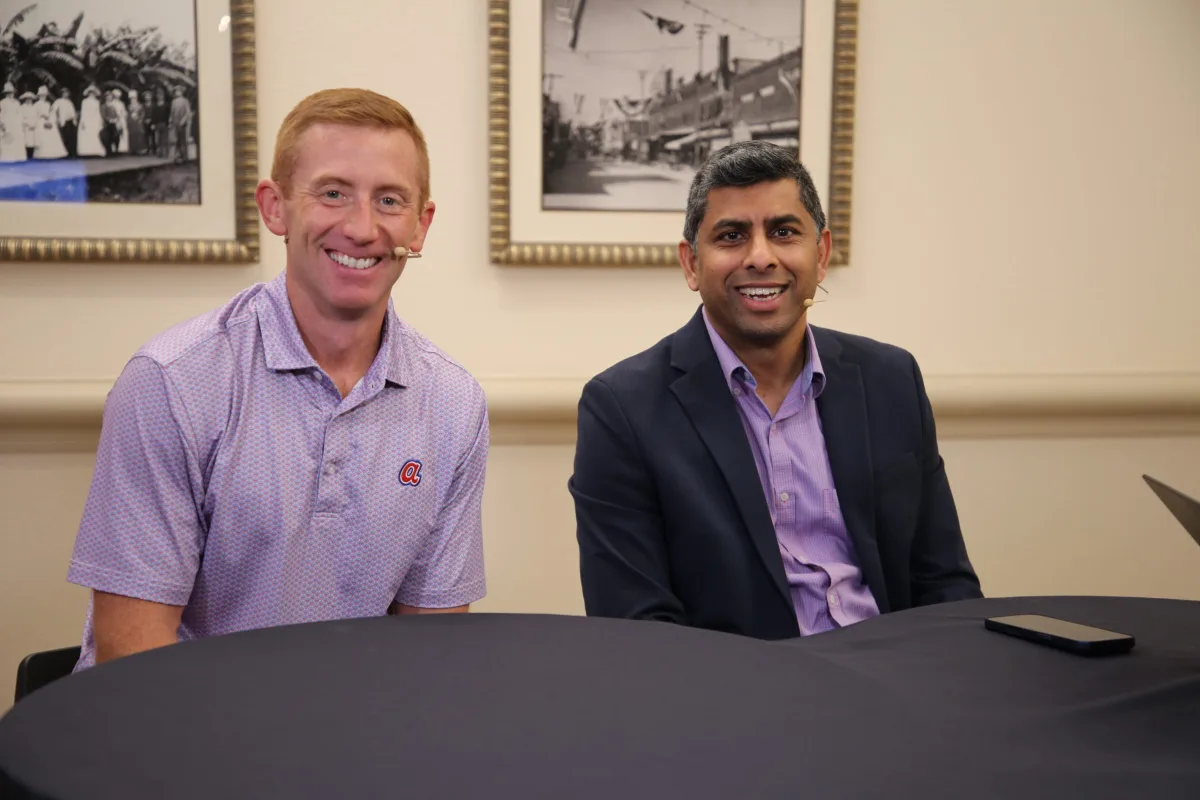
Jayaraman and Rick Rider, senior vice president of AI innovation at Infor, discussed the company's approach during Infor Velocity Week, speaking with theCUBE Research's Christophe Bertrand and Alison Kosik in an exclusive broadcast.
Micro-Vertical Configuration and Domain Expertise
Infor initially concentrated its agent development on common operational bottlenecks and repetitive workflows. The company's 2026.10 release introduces guardrails focused on security and scope management.
Rather than deploying one-size-fits-all solutions, Infor employs shared technical foundations across related sectors, then applies lightweight configuration to address the needs of micro-verticals such as chemicals or HVAC systems. Rider stated: "Every customer is uniquely different, and out-of-the-box AI does not exist in our world. We're working with customers to say, 'What do you want?'"
The specificity required varies dramatically even within a single sector. In food and beverage, for instance, receiving procedures differ substantially depending on the product type. Jayaraman explained: "For a dairy, it's a liquid receipt, which means I need to understand what the fat content of the milk is, the thickness of the milk while I'm doing the receiving function. If it's a protein or red meat, I'm bringing an entire animal into my receiving process. I need to know the country of origin and a few other extra specific configurations."
Human Oversight and Staffing
Infor's agents can autonomously create orders and assess demand, but transferring a customer's order between accounts still demands human sign-off. The company is also recruiting domain specialists to collaborate with software engineers and architects.
https://www.youtube.com/embed/W9WNDO2svDw?feature=oembed
Jayaraman noted the hiring challenge: "Finding tech people, programmers, it's a little bit easier compared to finding the industry-focused people with that deep industry knowledge. When you're going in front of the customer, you're not talking to IT people; you're actually talking to the business people."