IBM's Governed Context Strategy Puts Real-Time Data at the Heart of Production AI
IBM is positioning governed context—the right information delivered to AI agents at the right time—as essential infrastructure for enterprises deploying autonomous decision-making systems at scale.
Governed context is emerging as a critical operational requirement for artificial intelligence agents tasked with making business decisions. As organizations scale beyond consumer-facing productivity applications, their AI systems must access information that stays current with real-world conditions across the enterprise's technology stack.
IBM's strategy addresses this by connecting data governance to the broader operational challenge of running AI in production environments. The reasoning power of large language models depends fundamentally on the quality and relevance of information they receive, making data delivery itself an operational concern, according to Shaun Clowes, general manager of Confluent and Data at IBM.
You wouldn't give your accounts receivable work to a nuclear physicist that worked on your energy production side of your business. So, why would you take a very, very smart model, give it all of the possible information about your business and say, 'Figure out accounts receivable?' You need the right context for the job.
Shaun Clowes, general manager of Confluent and Data at IBM
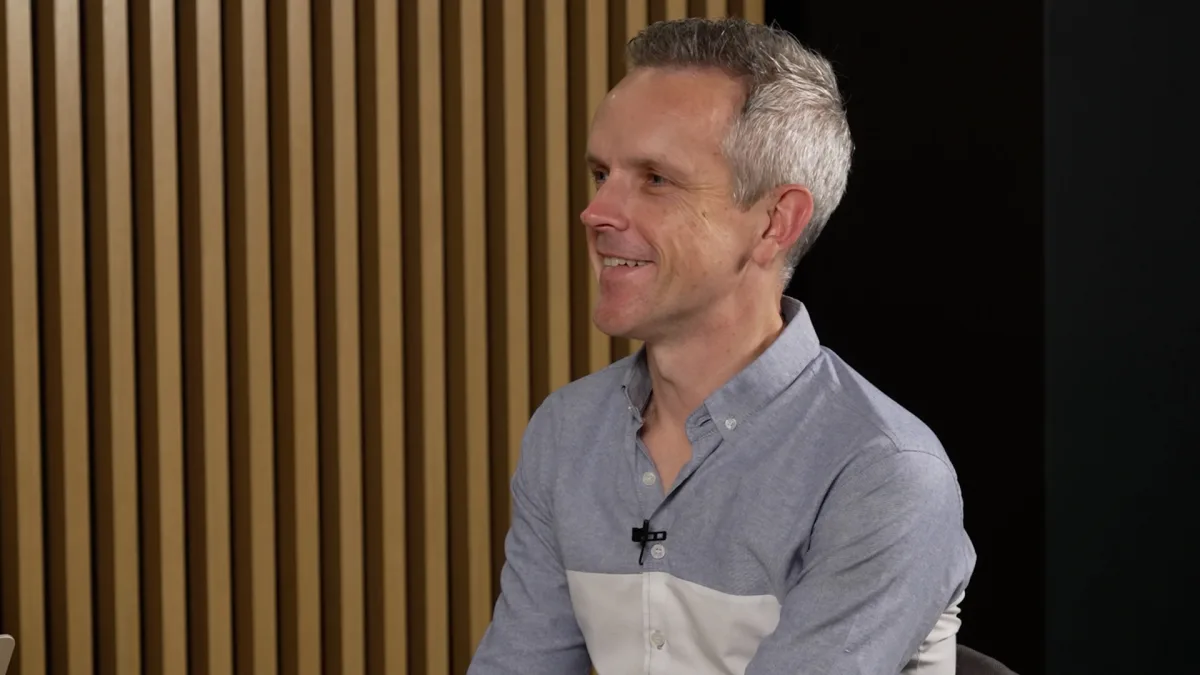
Clowes discussed these themes in an exclusive interview with theCUBE Research's Dave Vellante and John Furrier for IBM's AI Operating Model interview series, part of SiliconANGLE Media's livestreaming coverage. The conversation centered on real-time data delivery, agent specialization and governance mechanisms ahead of IBM TechXchange 2026.
Building governed context into the data flow
Enterprise data systems have historically been designed around specific storage, computing and application needs. AI agents introduce a new requirement: combining information from multiple operational systems—such as travel bookings, baggage tracking and rental car reservations—while that data remains actionable for immediate decisions.
Now we need a new type of architecture, a type of architecture that can bring together all the state of our business right now and present that directly to LLMs. We call that the streamhouse architecture.
Shaun Clowes
IBM Confluent combines streaming capabilities, connectivity, processing, governance and query functions to enable this approach. Rather than requiring centralization of all data before use, the platform allows data products to be prepared and governed at the point where business information is generated.
Our argument would be that you can actually move all of that very, very close to where the data is first produced, as close as you possibly can. The earlier you govern it, the better. The quicker you produce the high-value data, the better. Then you need to just connect up to all the relevant places.
Shaun Clowes
Giving specialized agents room to reason
Delivering current, governed data represents only one dimension of the challenge. Agents also require context specifically tailored to their assigned work. Business terminology often carries different meanings across different teams, so preparing an agent's context requires establishing the definitions relevant to its particular task.
You can describe, 'Hey, in this business process, what I mean is X.' Then, you can have these governed metrics and these governed datasets that effectively represent the foundation upon which the model will reason.
Shaun Clowes
Organizations can start by deploying agents to high-value tasks and refining individual agents as operational experience accumulates. Once agents consistently execute established business processes, the potential emerges to reconsider how work itself is structured.
Then you can say to the supervising agent, 'Do I even need these processes? Should I just do something totally different?' The best bit about this whole system is it can learn at every layer.
Shaun Clowes
Making business context available in production
As agents assume greater responsibility, access to current business information becomes progressively more critical. The shift from human-assisted decision-making to autonomous operations fundamentally changes how enterprises must deliver information. Agents operating continuously require access to operational data without waiting for human intervention to gather it.
People used to talk about data as the new oil, but what they really meant was [that] data, in some sense, existed and was used by humans to make good decisions. Businesses were run by humans … [and] that's how you win.
Shaun Clowes
Data sources may be distributed across oil rigs, cruise ships or other geographically remote installations. Enterprises must integrate these sources into a coherent operational picture without assuming any single centralized system will contain all necessary information.
https://www.youtube.com/embed/DWZbOcNRmIM?feature=oembed
You should always be asking yourself, 'How can I know the state of my business right now?' Because that is the world in which you make decisions. That is the world in which humans would make decisions, too.
Shaun Clowes