Google Bundles AI Into Search for Schools, Forcing a Choice Between Services
Google is disabling Gemini and Search by default for K-12 accounts, but schools that reject AI will lose access to Google Search entirely once the company integrates AI features into the search product.
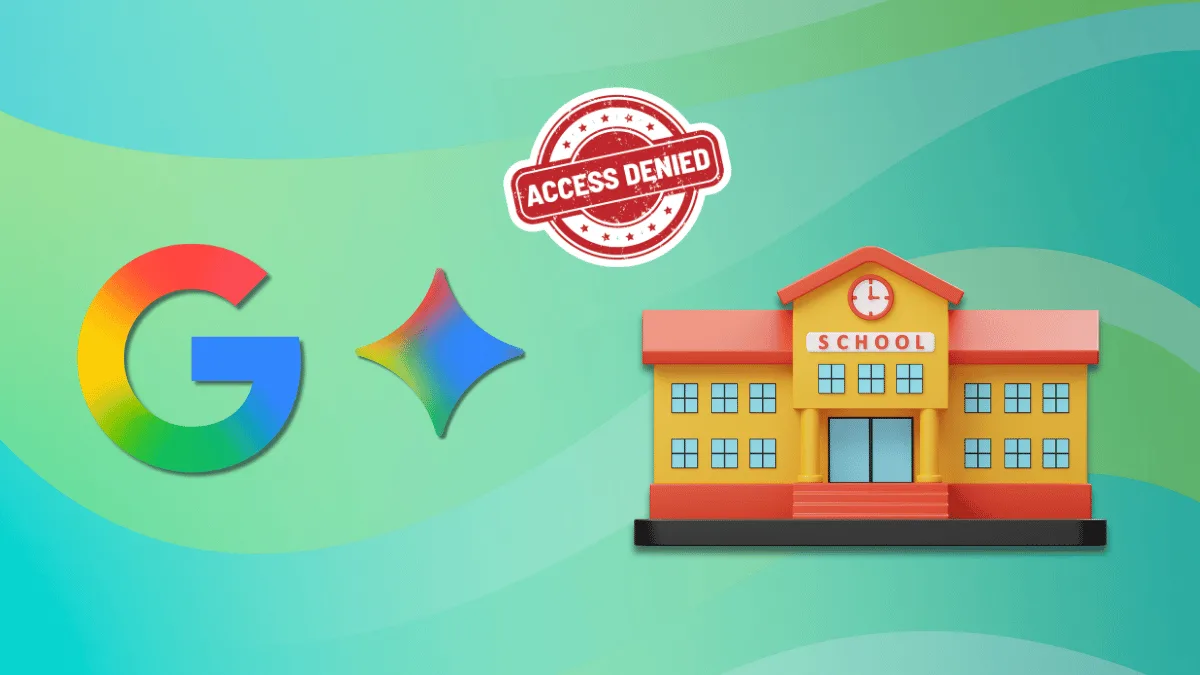
Google plans to disable Gemini, Gemini Notebook, Gemini in Classroom, and Search across K-12 student accounts by default. School administrators will need to manually activate each service individually, and the features will remain inactive until they do so.
The integration of AI into Search creates a complication for schools seeking to avoid generative AI tools. Google has embedded AI Mode and AI Overviews into its search product, designed to walk students through problems incrementally rather than providing direct answers. Schools that opt out of AI will find themselves unable to offer Google Search to their students.
According to Chris Phillips, Google's VP for Education, schools that decline AI services will display a notice to students indicating that Search is unavailable. This approach effectively ties access to Google's search engine to acceptance of its AI capabilities.
What happens starting in 2027
Beginning in 2027, schools whose administrators enable AI will have access to two distinct Search configurations. One mirrors the consumer version with AI overviews and chat functionality, while the other centers on Guided Learning, a student-oriented variant of Gemini that functions as an interactive study tool. Rather than delivering answers directly, Guided Learning poses questions to students and breaks down problems into manageable steps. Google has indicated that additional details will be shared over the coming months before implementation begins.
The August policy shift
Gemini in Classroom expanded to students of all ages in August, with the Gemini tab enabled by default at institutions that had previously permitted student access to Gemini. Schools that had restricted Gemini for their students maintained those restrictions. This represents a reversal of the previous approach, under which Gemini was limited to students aged 18 and above, with administrators able to disable it for younger users by placing them in a separate organizational unit.
Two major U.S. school districts have already taken independent action. New York City announced restrictions on student-facing generative AI tools for students in preschool through eighth grade, while Los Angeles Unified has blocked such tools on district-owned devices.
A different model in Germany
Germany's approach to school technology differs substantially. A four-year framework agreement with IONOS, secured through a public procurement process, provides schools in Berlin, Hamburg, Hesse, Bremen, North Rhine-Westphalia, and Rhineland-Palatinate the option to adopt a cloud infrastructure built on Nextcloud's open source platform. Participation is voluntary, and the procurement requirements specifically mandate software licensed under an OSI-approved open source license, emphasizing digital sovereignty and the ability to switch vendors.
The critical difference lies in the structure of choice. Schools in the United States that want access to Google Search will be obligated to accept its integrated AI features once the changes take effect. By contrast, the German framework permits schools to participate or abstain entirely, without bundling unrelated services together.