Finance chiefs embrace AI faster than their systems can handle, Workiva warns
As financial organizations rush to deploy artificial intelligence in reporting workflows, a widening gap has emerged between executive appetite for automation and the operational infrastructure needed to govern it safely.
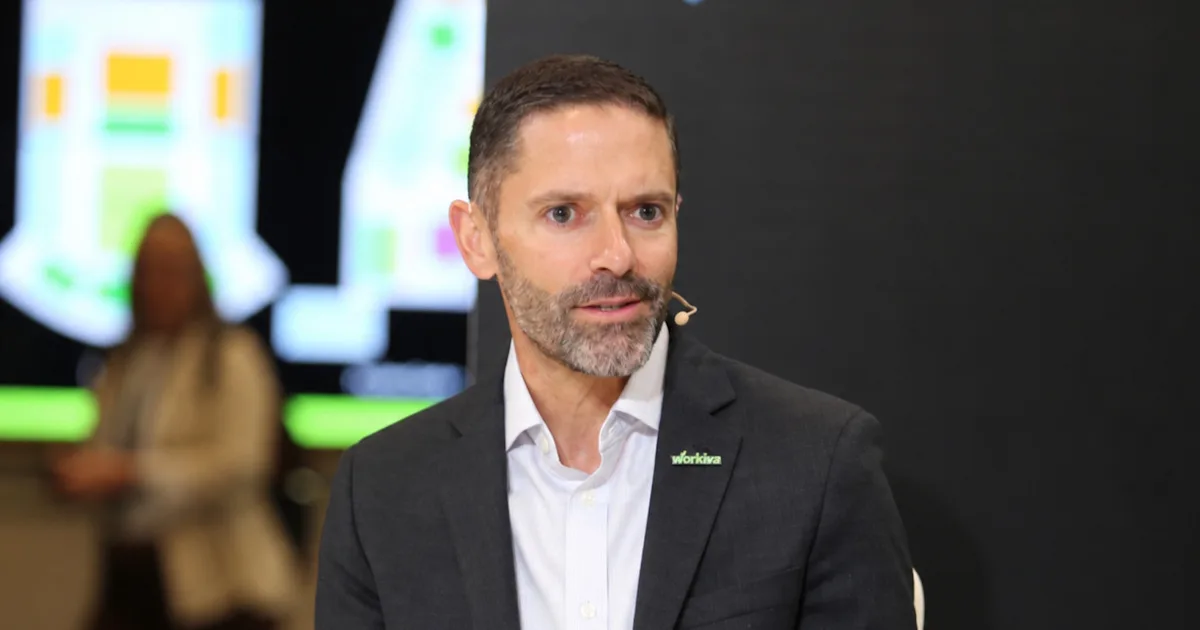
Governance frameworks for artificial intelligence are becoming critical as the technology enters financial reporting operations. Corporate leaders are under mounting pressure to move quickly on AI adoption, yet many lack the foundational data quality and control mechanisms required to depend on algorithmic output. Workiva Inc. is working to close this divide by grafting time-tested reporting controls onto AI-enabled processes, though internal research indicates that management confidence has outpaced the organization's actual readiness, according to Steve Soter, vice president and industry principal at Workiva.
"The thing that stood out to me the most was a stat that actually surprised me significantly," Soter said. "It was that 84% of executives said that they were at least somewhat willing to trust AI to generate an annual report without human review."
Soter shared these observations during a conversation with Krista Case and Alison Kosik at Workiva's Amplify event, which was broadcast exclusively on theCUBE, SiliconANGLE Media's livestreaming platform. The discussion centered on the safeguards organizations must implement to deploy AI responsibly in financial reporting contexts.
Traceability and control remain foundational
The danger extends beyond a single erroneous figure or misstatement. When organizations cannot establish an audit trail for information sources or document the review process, a localized error can metastasize into a systemic control breakdown. Established financial controls retain their relevance even as machines handle an expanding share of operational tasks, Soter explained.
"To me, I think it's maybe a different flavor of the same risk," he said. "When I think about it, back to the days when I was a controller, it was really important for me to know where the data was coming from, who touched it, what happened to it, how did it get reviewed and approved?"
While AI can streamline established reporting workflows, velocity alone delivers minimal benefit when the underlying process lacks reliability. Finance departments require governed data sources and documented sign-offs. Without these elements, automation can propagate errors at scale and obscure their origin, Soter cautioned.
"To me, AI doesn't change that," he said. "It actually makes it even more important because accelerating a process, if you don't have it grounded by those things that we discussed, those four things, then speed doesn't become an asset. It really becomes a liability. It becomes a risk."
Human responsibility cannot be delegated
Oversight by people becomes particularly critical when AI systems process data destined for board presentations or external stakeholders. An algorithm may produce the content, but the executive who authorizes it bears ultimate responsibility. Review therefore functions as an integral component of the reporting cycle, not merely a temporary precaution during the technology's maturation phase, Soter stressed.
"An AI tool isn't signing off on the financial statements; a human is," he said. "If that human signs off on it, but yet trusted that AI had done everything that it was supposed to do and done it correctly, again, if that's not the case, that could be a big risk."
Data quality represents a separate hurdle. Workiva's findings revealed that merely 11% of executives viewed their data as suitable for AI deployment, indicating that numerous firms are automating tasks before addressing deficiencies in their information assets. Though AI might assist in refining these records, poor-quality inputs will continue generating unreliable outputs, Soter noted.
https://www.youtube.com/embed/mYlG02ySzzk?feature=oembed
"It makes you wonder, how bad was the data before we were even having this AI conversation?" he asked. "To me, that just underscores, honestly, the opportunity for AI, because I think AI actually has a role in potentially helping to clean that up, like maybe boosting that 11%, but AI is only as good as the data that it is using."