CXL Memory Sharing Incurs Steep Software Overhead in Multi-Server Setups
A joint study from Intel and the University of Texas at Arlington reveals that synchronization costs undermine the promise of pooled CXL memory for AI workloads.
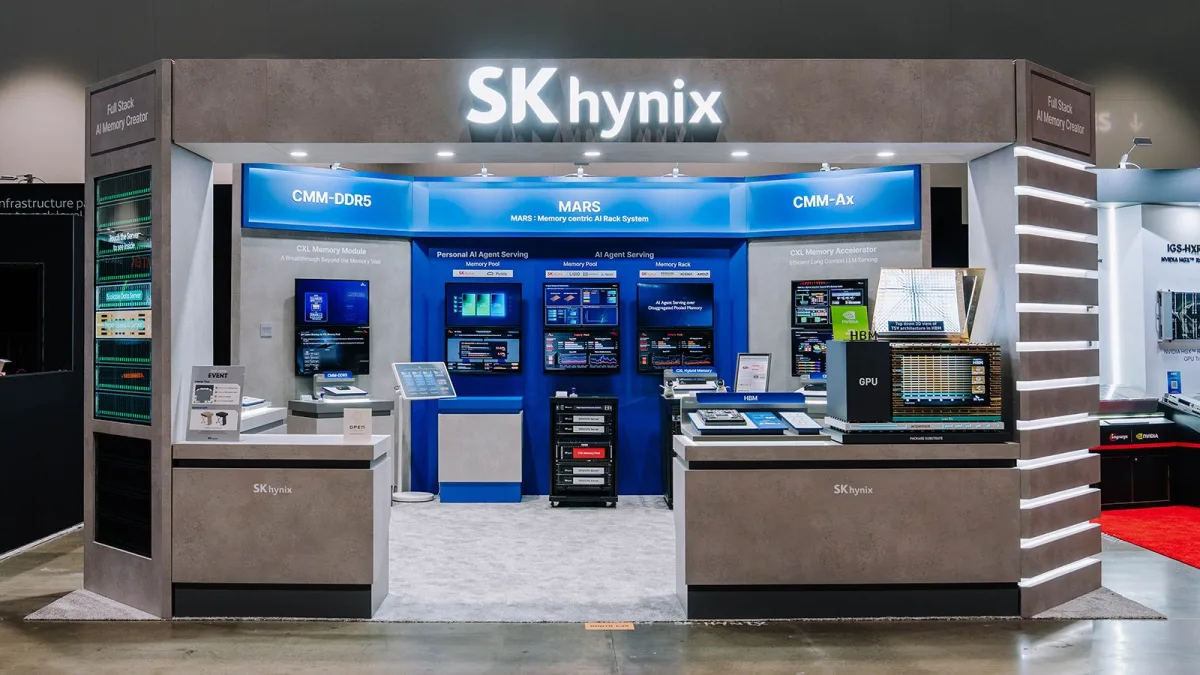
As memory vendors champion shared CXL pools for artificial intelligence's KV cache requirements, researchers have quantified a significant performance penalty lurking beneath the surface.
Scientists from the University of Texas at Arlington and Intel conducted experiments on actual hardware where four servers accessed a single CXL memory pool. Their work, presented at Supercomputer 2026 (SC26), uncovered a troubling reality: the absence of automatic cache coherence across servers forces applications to rely on software-managed synchronization, introducing a 3-5 microsecond latency penalty with each lock operation. This overhead effectively neutralizes much of the advantage that shared CXL memory pools promise for AI KV cache deployments.
Locks function as gatekeeping mechanisms for shared data access. Before modifying information stored in the pool, a server must acquire the lock; other servers remain blocked until the lock is released. This prevents simultaneous writes from corrupting data. On a single server, the processor's built-in hardware manages this coordination in fractions of a microsecond. However, when multiple servers contend for the same resources, software takes over the enforcement role—and that transition carries a measurable cost.