Anthropic cuts Haiku 5.5 pricing by up to 90% as smallest model targets agentic tasks
The company released Claude Haiku 5.5 on Wednesday with dramatic price reductions and new effort controls, positioning its most affordable model for high-speed agent work and computer-use applications.
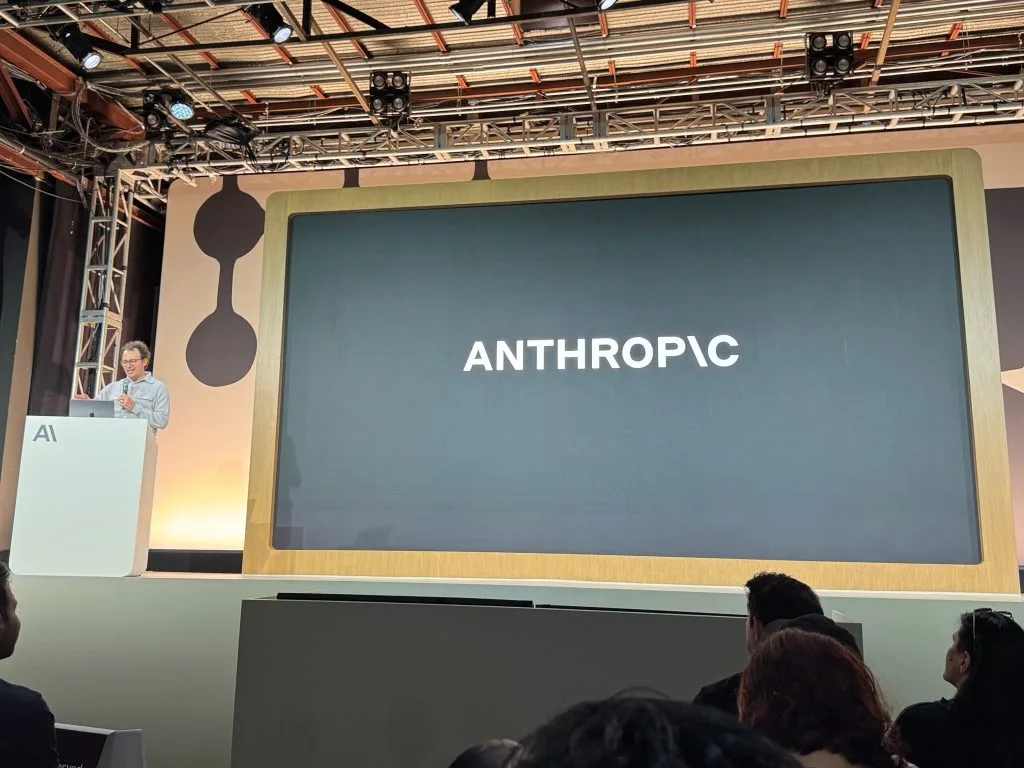
Anthropic unveiled Claude Haiku 5.5 this week, marking the first update to its smallest and least expensive model since nearly a year ago. The release represents Anthropic's third 5.5-generation model in a month, though the company has not yet rolled out Fable 5.5, which is undergoing a more extensive evaluation cycle.
Pricing structure for Haiku 5.5
The new iteration maintains Anthropic's positioning of Haiku as the "fastest and most efficient model," but with substantially lower costs. Requests under 100,000 tokens now cost $0.10 per million input tokens and $0.50 per million output tokens, down from the $1/$5 pricing of Haiku 4.5. Larger requests fall to $0.50/$2.50, compared to Haiku 4.5's flat rate regardless of request size. Anthropic notes that roughly 90% of Haiku 4.5 traffic qualified for the lower tier, suggesting most developer workloads will benefit from the reduced pricing.
These adjustments represent 90% and 50% reductions in per-token costs respectively. Accounting for a mix of request types and an improved tokenizer that consumes slightly more tokens per operation, Anthropic estimates typical savings around 75%. Haiku 5.5 introduces effort controls for the first time, with a medium default setting that lets developers manage token consumption per task.
Use cases and capabilities
Historically, compact models have powered high-volume operations such as summarization, classification and message routing. Anthropic indicates that Haiku 5.5 expands this scope to include data compaction, database queries and agent-based applications where latency is critical—including live customer service interactions and automated browser operations.
Performance benchmarks
Anthropic's testing reveals substantial improvements over Haiku 4.5. On the offline portion of OSWorld 2.1, which evaluates computer-use capabilities, Haiku 5.5 achieved 72.4%, a dramatic jump from Haiku 4.5's 15.7% and surpassing OpenAI's GPT-6 Luna at 48.9%.
For the GDPval-AA v2.1 knowledge-work benchmark, Haiku 5.5 scored 1,620 compared to 735 for Haiku 4.5 and 1,437 for GPT-6 Luna. On Terminal-Bench 4.0, which measures complex multi-step command-line operations, Haiku 5.5 posted 39.2%, versus 0% for Haiku 4.5, 16.4% for GPT-6 Luna and 70.6% for Sonnet 5.5.
Competition from international providers
Anthropic's comparisons focus on its own models and OpenAI's offering, but developers evaluating small models also consider alternatives from Z.ai, Alibaba and others. According to Artificial Analysis, Z.ai's GLM-5.3-Flash scores 1,647 on GDPval-AA v2.1 and 1,454 on AA-Briefcase v1.1, compared to Haiku 5.5's 1,620 and 1,578 respectively.
More aggressive pricing exists elsewhere. Alibaba's international platform offers Qwen3.7 Flash at $0.03 per million input tokens and $0.13 per million output tokens for inputs up to 32,000 tokens. For larger inputs between 32,000 and 256,000 tokens, rates climb to $0.10 and $0.40.
Availability and access
Haiku 5.5 is accessible through the Claude Platform, Amazon Web Services, Google Cloud and Microsoft Azure. Developers on Anthropic's platform can invoke it as claude-haiku-5-5. The company is rolling out beta support for computer-use and browser-use capabilities in its Python and TypeScript SDKs.
Additional announcements
Alongside Haiku 5.5's debut, Anthropic is halving the cache-read price for Sonnet 5.5 from $0.20 to $0.10 per million tokens. "Anthropic is cutting Sonnet 5.5's cache-read price in half," the company stated, noting this should reduce costs for most agent-based tasks by approximately 20%. The reduction rolls out across platforms Wednesday, though some existing Azure and Google Cloud customers will see the change within a few days.
Anthropic is introducing monthly API credits to Max and Team subscription tiers this week. Max 5x subscribers receive $100 monthly, Max 20x subscribers get $200, and Team subscribers receive up to $500 pooled across their organization. Credits work with any model on the Claude Platform.
Haiku 5.5 incorporates enhanced cybersecurity protections compared to Haiku 4.5, though Anthropic indicates these safeguards permit a broader range of defensive security work than Sonnet 5.5 allows. Penetration testing remains restricted. Organizations requiring expanded access for cybersecurity or biology applications can petition Anthropic's verification programs.