Alienware Unveils Dual OLED Monitors With Advanced Stripe Technology, Plus Mainstream VA Options
Dell's Alienware division has introduced two high-end OLED gaming displays featuring proprietary stripe arrangements designed to enhance color and text performance, alongside two curved VA monitors for budget-conscious gamers.
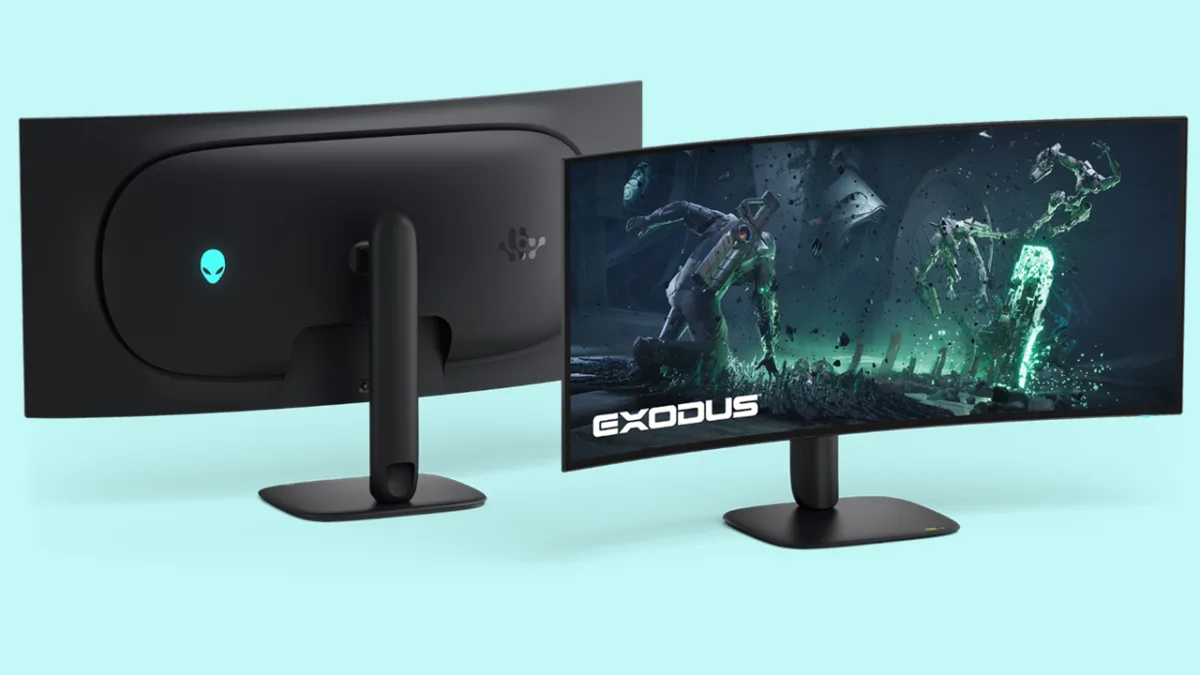
Alienware has maintained its position as a leader in gaming monitor innovation, having been among the earliest adopters of 500 Hz refresh-rate panels and QD-OLED technology. The brand is now unveiling four new models that represent another step forward in the category. All four displays share Alienware's Alienware 30 design language, incorporating AlienFX lighting, 360-degree ventilation, and optimized cable management.
Alienware's two new OLED gaming monitors
The flagship AW3926QW stands as the world's first 39-inch monitor utilizing an RGB Stripe Tandem OLED configuration paired with 5K resolution. The display employs an LG-sourced panel featuring a 4-stack light source with two blue elements alongside red and green components. These stacked emissive layers sit behind an RGB-stripe subpixel layout, which Dell says delivers enhanced color volume, brightness, and text clarity compared to conventional WOLED panels.
The AW3926QW delivers a 5120 x 2160 resolution at a native 165 Hz refresh rate. As a dual-resolution monitor, it can drop to 2560 x 1080 to achieve 330 Hz. The panel achieves a 1.75 million:1 contrast ratio through a polarizer layer that minimizes ambient light reflection. The monitor supports both AMD FreeSync Premium Pro and Nvidia G-Sync, with a 0.03 ms GtG response time and 99 percent DCI-P3 coverage.
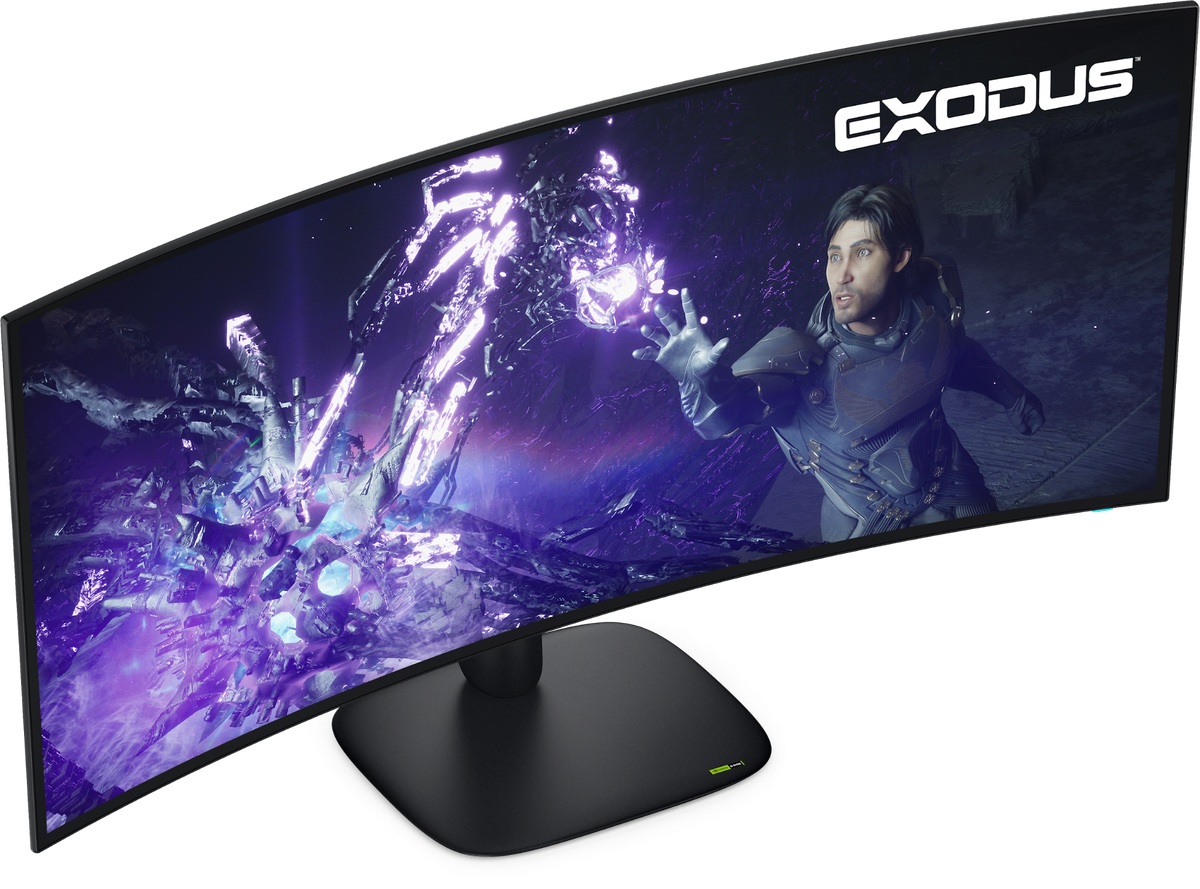
The display includes multiple eSports modes that allow users to activate predefined screen sizes within the larger panel. Options include a 24.5-inch simulation at 1520 x 855 resolution with 330 Hz, a 27-inch simulation at 1680 x 945 resolution with 330 Hz, or a 31.5-inch 4K configuration at 165 Hz. Unused screen areas turn black in these modes. An integrated machine learning algorithm monitors usage patterns and adjusts brightness to extend panel lifespan.
Connectivity includes two HDMI 2.1 ports, one DisplayPort 2.1 port, and a USB-C port with DisplayPort 2.1 Alt Mode and 90W Power Delivery. A USB hub provides two downstream USB-A 5 Gbps ports and one USB-C 5 Gbps port.
The AW3426DW employs a Samsung-based QD-OLED panel with 5-stack "Penta Tandem" technology, increasing the blue-emitting stack from 4 to 5 layers. This configuration delivers 1.3x greater luminous efficiency and 2x longer panel lifespan compared to earlier designs. A V-Stripe RGB subpixel arrangement produces sharper text without the fringing typical of traditional QD-OLED panels.
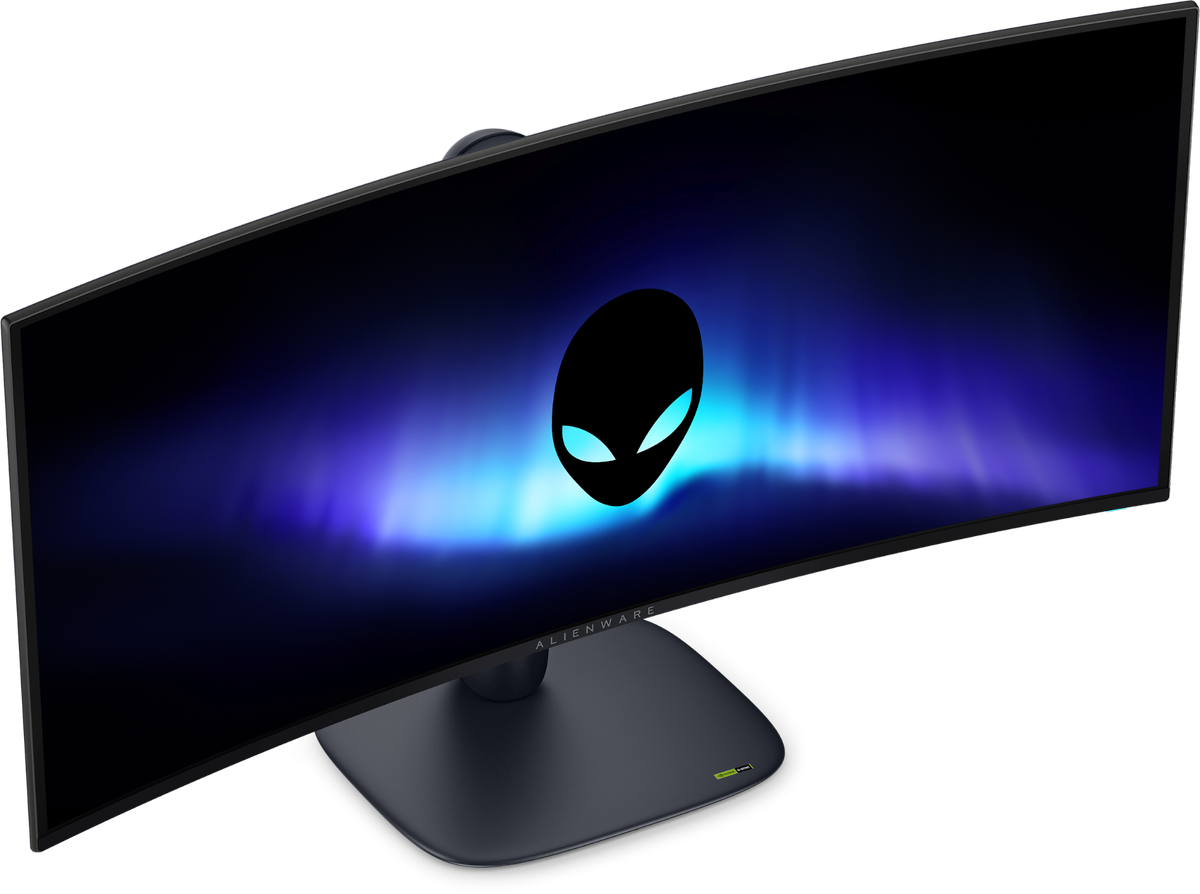
The 34-inch AW3426DW offers a 3440 x 1400 resolution with a 1800R curve and peak brightness of 1,300 nits (300 nits typical operation). It supports a 280 Hz native refresh rate across HDMI and DisplayPort connections, along with VESA DisplayHDR True Black 500 and Dolby Vision. FreeSync Premium Pro and G-Sync compatibility are included.
The AW3426DW features two HDMI 2.1 ports and one DisplayPort 1.4 port. Its USB hub includes USB-A 5 Gbps and USB-C 5 Gbps ports, with the USB-C supporting 15W charging.
Alienware hasn't forgotten about mainstream gamers with its new Alienware 32 and 34
Two additional monitors target the mainstream gaming segment: the AW3226DM and AW3426DWM. Both employ 1500R curved VA panels with 240 Hz refresh rates, VESA DisplayHDR 400 support, 3,000:1 contrast ratios, and 1ms GtG response times.
The AW3226DM provides a 32-inch panel with 2560 x 1440 resolution in 16:9 aspect ratio, while the AW3426DWM offers a 34-inch panel with 3440 x 1440 resolution in 21:9 aspect ratio.
Both models include two HDMI 2.1 ports, one DisplayPort 1.4 port, and downstream USB-A 5 Gbps and USB-C 5 Gbps ports.

Dell has not disclosed pricing for the AW3926QW or AW3426DW at this time. The AW3926QW will arrive this fall, while the AW3426DW launches in July. The AW3226DM and AW3426DWM both debut in July at $299.99 and $399.99 respectively.
Source: Tom's Hardware