Lenovo Pro 9n with RTX Spark 18-core: Lighter, thinner, but battery life remains a concern
Lenovo's Pro 9n offers an OLED display and extensive port selection as an alternative to Microsoft's Surface Laptop Ultra, though it shares the platform's battery limitations.
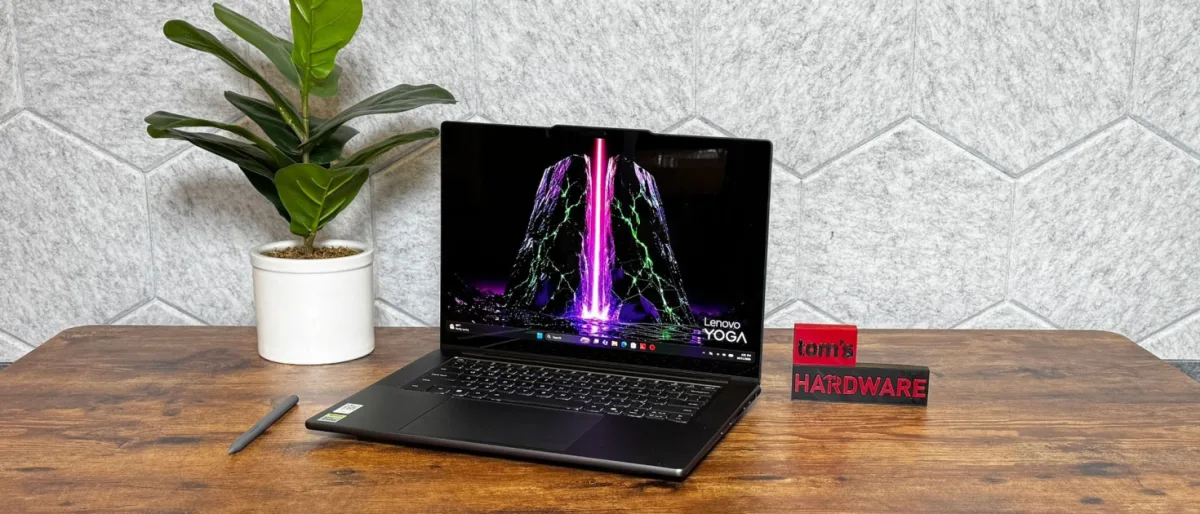
Following Microsoft's lead with premium machines built around Nvidia's new RTX Spark processors, Lenovo has introduced the Pro 9n with distinctive features including an OLED panel and stylus-enabled touchpad. This review marks the first examination of the 18-core RTX Spark variant, which carries fewer CUDA cores than the higher-end configuration, allowing for a performance comparison across different tiers of the same chip family.
Design and Physical Characteristics
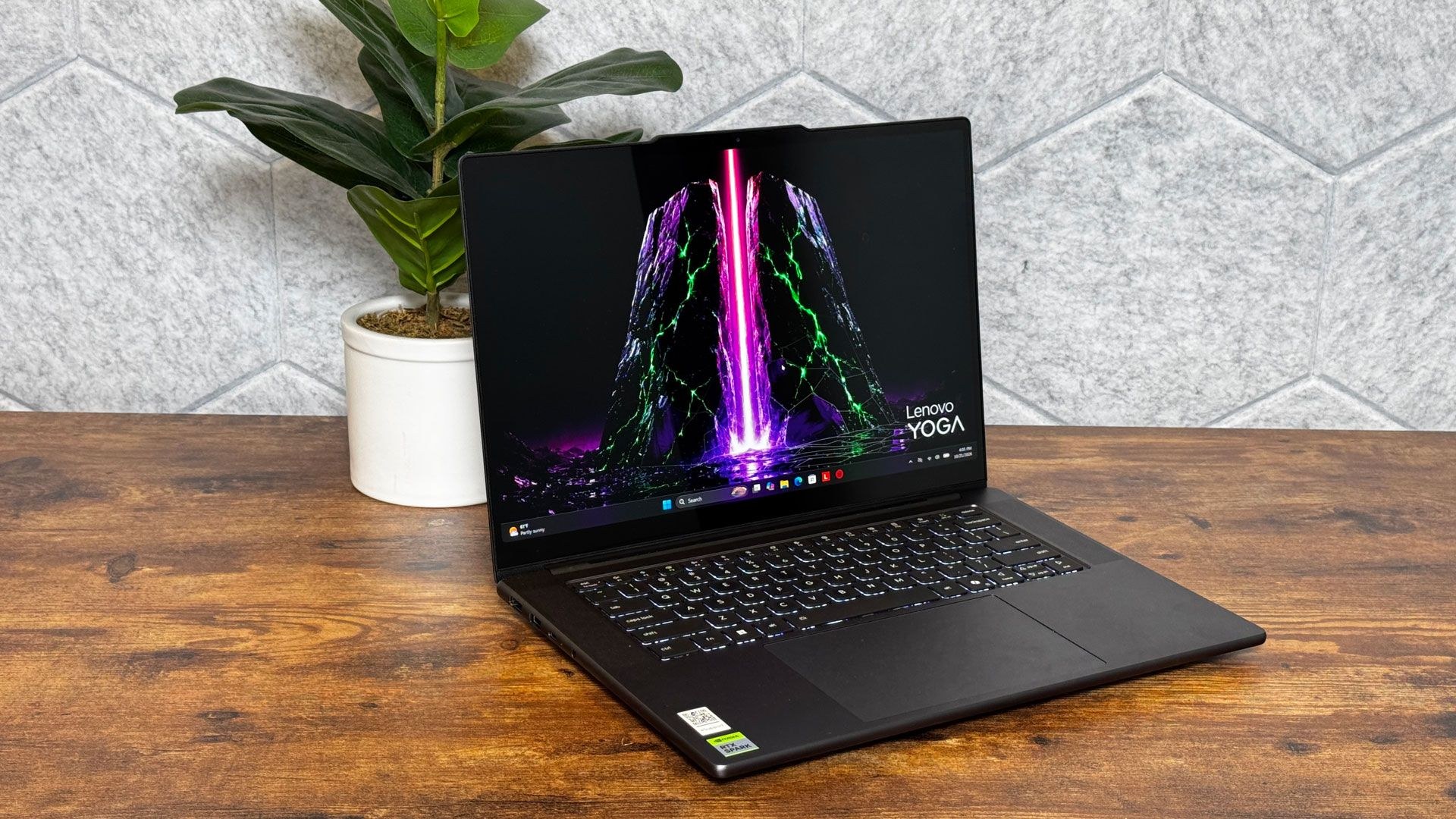
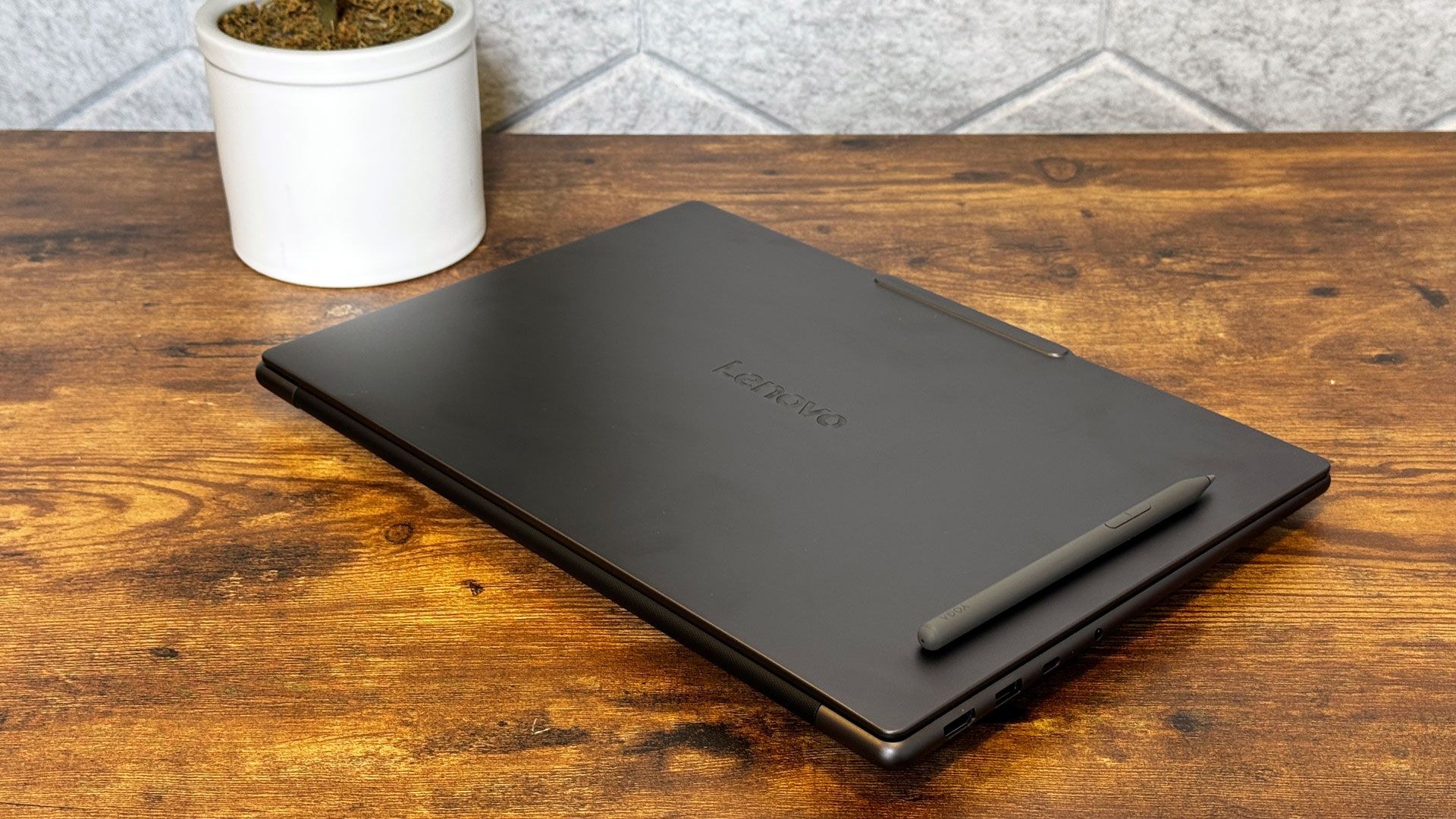
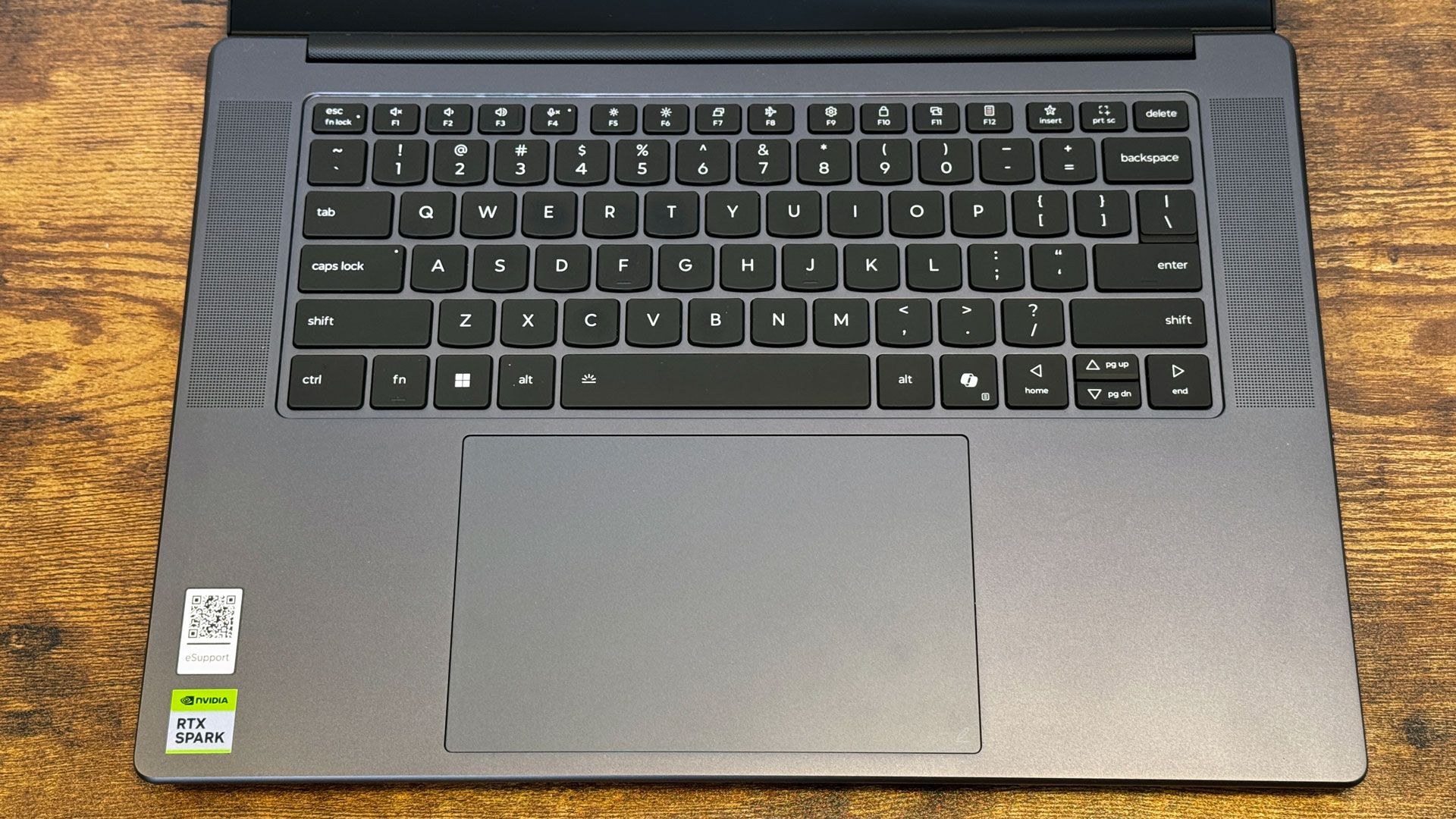
The Pro 9n presents itself as a utilitarian device in dark gray with Lenovo's signature anti-notch camera housing. Its rounded keyboard deck echoes the aesthetic of Lenovo's premium Yoga line, though the matte finish makes this design choice less prominent than it might be on colorful variants. The keyboard area remains largely uncluttered, with only an Nvidia RTX Spark sticker interrupting the space above the backlit keys and 15.3-inch OLED screen.
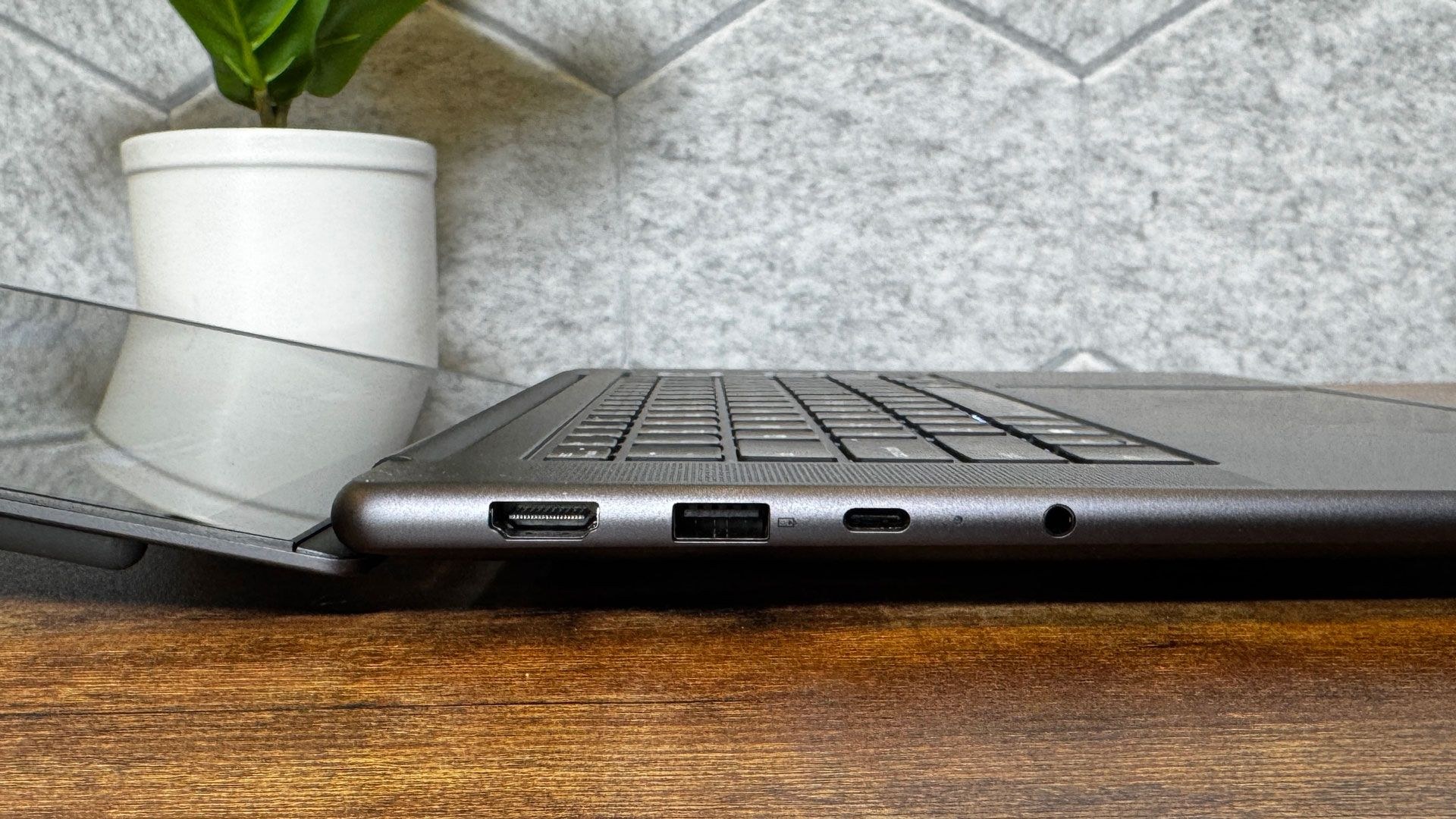
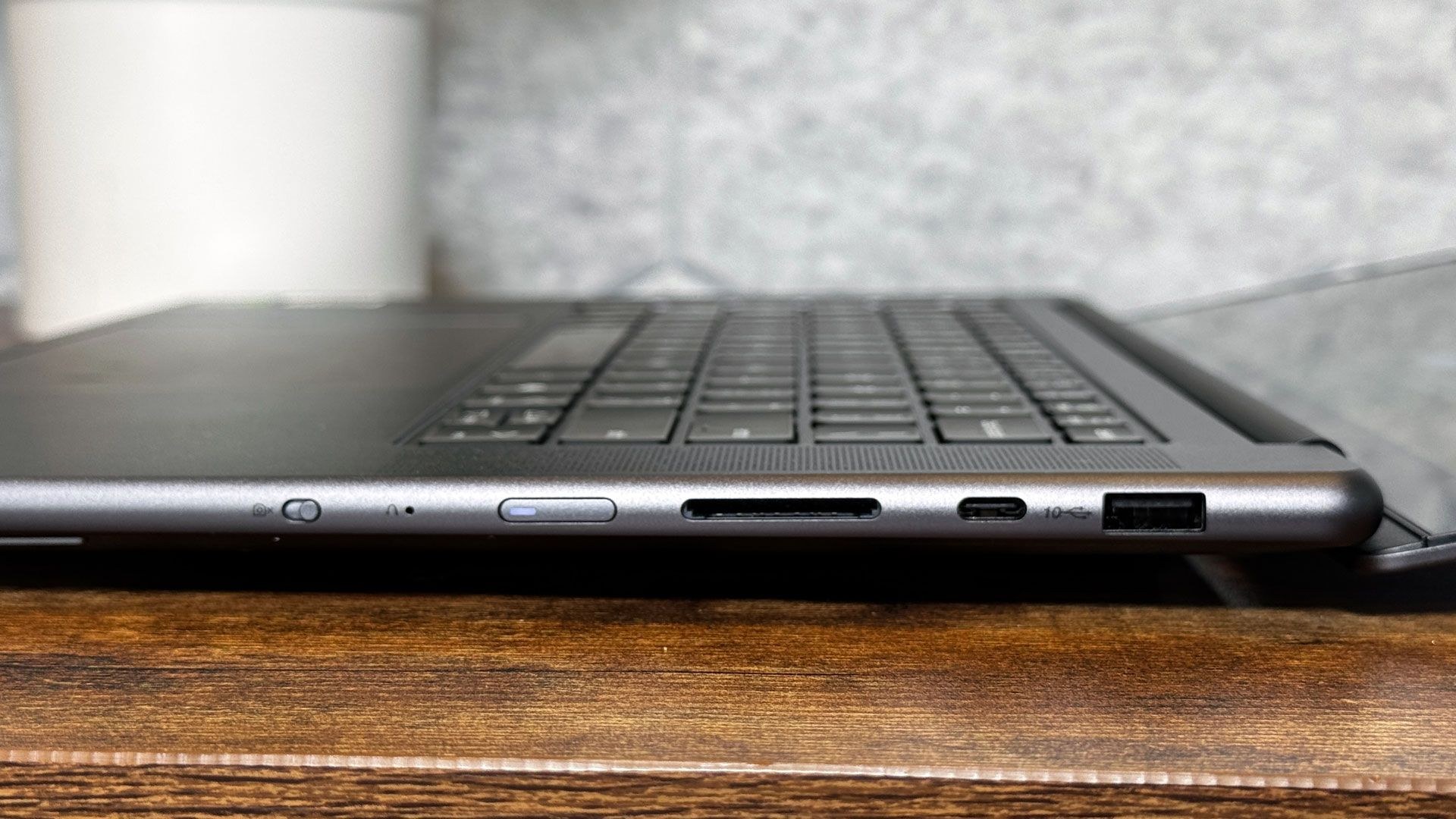
Port availability stands out as a strength, with both sides of the chassis offering USB Type-C and Type-A connections. The left edge includes HDMI and a 3.5 mm headphone jack, while the right side houses an SD card slot and an electronic shutter for the webcam. Measuring 13.66 x 9.53 x 0.66 inches and weighing 3.64 pounds, the Pro 9n is wider and deeper than the Microsoft Surface Laptop Ultra (12.95 x 9.40 x 0.75 inches) but thinner, and lighter than the Surface's 4.41 pounds. Apple's 16-inch MacBook Pro with PROLED XDR edges it at 0.63 inches thick, while that machine weighs 4.1 pounds.
Specifications
- Display: 15.3-inch, 2560 x 1600, OLED, touch, 165 Hz
- Ports: HDMI 2.1, 2x USB Type-A (10Gbps), 2x USB4 Type-C (40 Gbps), 3.5 mm headphone jack, SD card reader (UHS-II)
- Dimensions: 13.66 x 9.53 x 0.66 inches / 347 mm x 242 mm x 16.7 mm
Productivity Performance
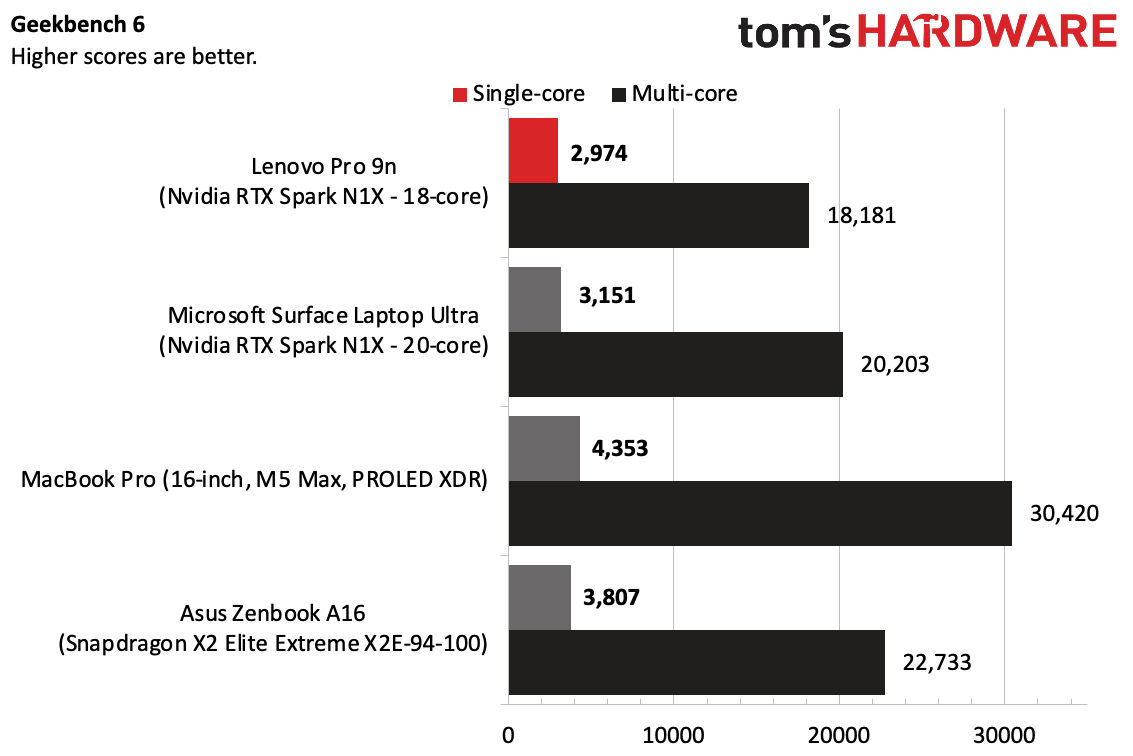
The test unit featured the lower-tier RTX Spark N1X configuration with an 18-core CPU, paired with 32GB of RAM and 1TB of storage. On Geekbench 6, the Pro 9n trailed the Surface Laptop in both single-core and multi-core metrics, a gap potentially attributable to thermal management differences. The MacBook Pro with M5 Max outperformed both RTX Spark systems, as did the Asus ZenBook A16 with Snapdragon X2 Elite Extreme.
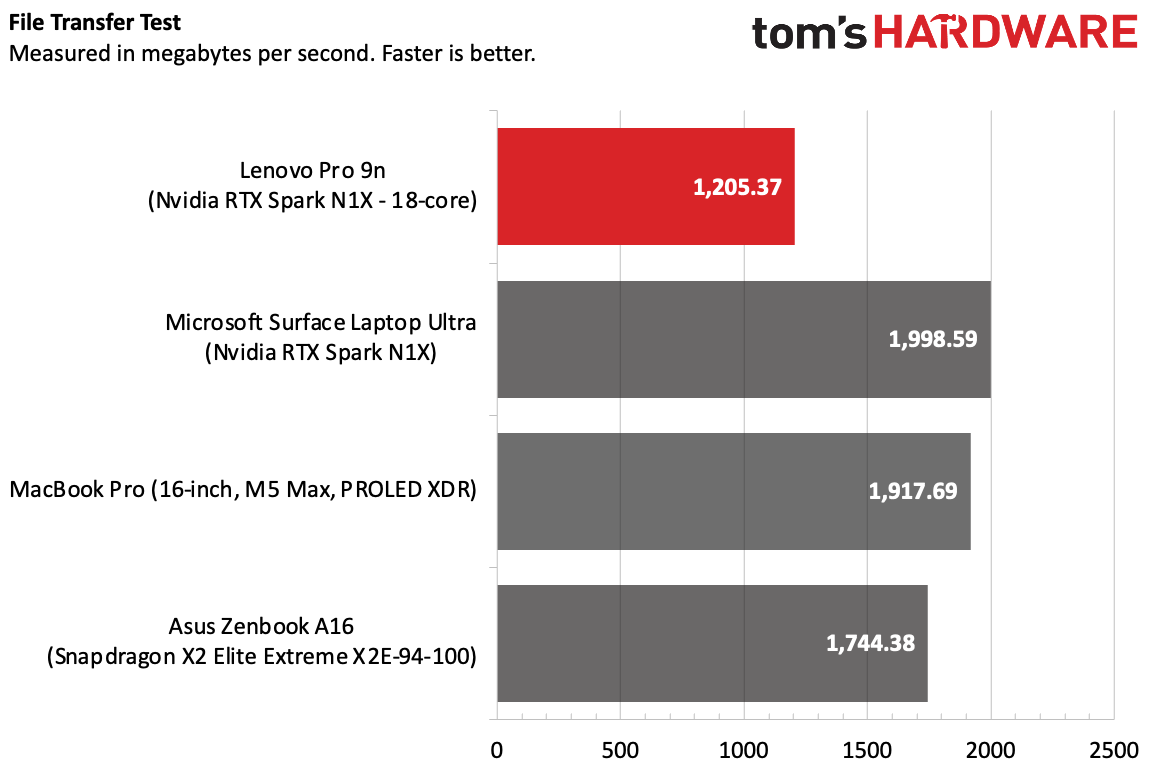
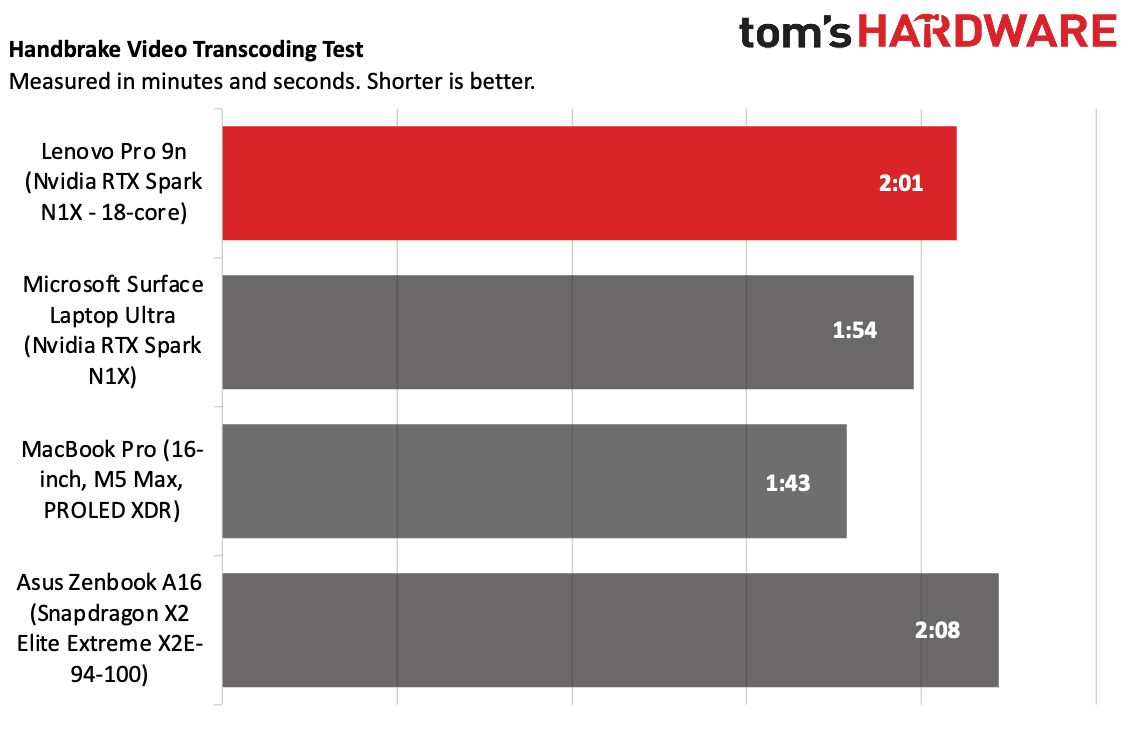
File transfer performance reached 1,205.37 MBps when copying 25GB of data—respectable but not competitive within the ultra-premium segment, where every other tested laptop achieved faster speeds. Video transcoding via Handbrake converted 4K footage to 1080p in 2 minutes and 1 second, placing it 7 seconds behind the Surface Pro with the 20-core CPU but ahead of the Snapdragon-equipped ZenBook.
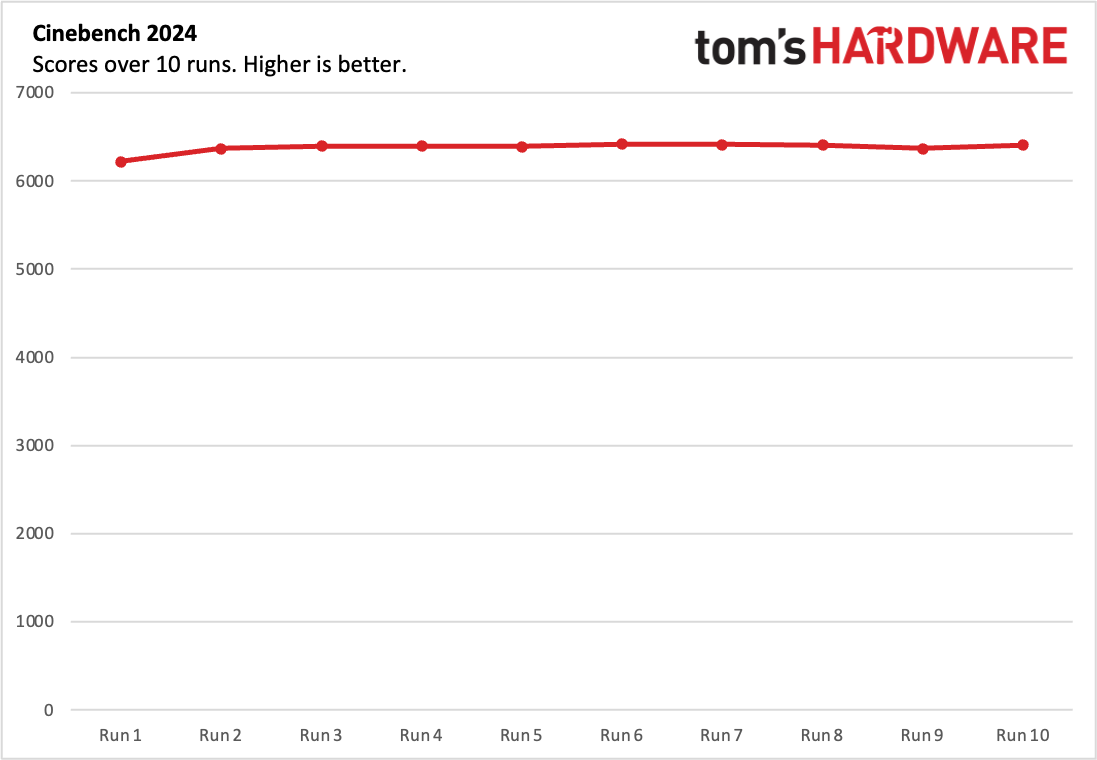
Cinebench 2026 stress testing, which runs a multi-core benchmark ten consecutive times, revealed consistent performance with improvement over successive runs as cooling ramped up. The Pro 9n opened at 6,219.85 and peaked at 6,417.45 on run 6, with most iterations landing in the high 6,300s. The Cortex-A725 cores maintained an average of 2.81 GHz while Cortex-X925 cores averaged 3.57 GHz. Monitoring software HWinfo was missing a single A725 core in its readout, an issue also observed on the Surface Laptop Ultra.
AI Performance: RTX Spark Variants Compared
The reviewed Pro 9n carried the entry-level RTX Spark with 18 cores and 5,120 CUDA cores, though configurations with the 20-core, 6,144 CUDA-core variant are available. Testing via AgentPerf-Local using Qwen 3.8-27B-UD_IQ3_XXS revealed minimal performance separation between the two chips. The Surface Laptop Ultra completed the benchmark in 1,148.3 seconds compared to the Pro 9n's 1,196.6 seconds—a 4.12% advantage for the higher-end processor. Both systems operated under GPU memory constraints, with the Surface allocating 24GB to graphics and the Pro 9n limited to 16GB, as the benchmark simulates conversations by replaying exchanges with emphasis on prompt processing rather than token generation.
Gaming and Graphics
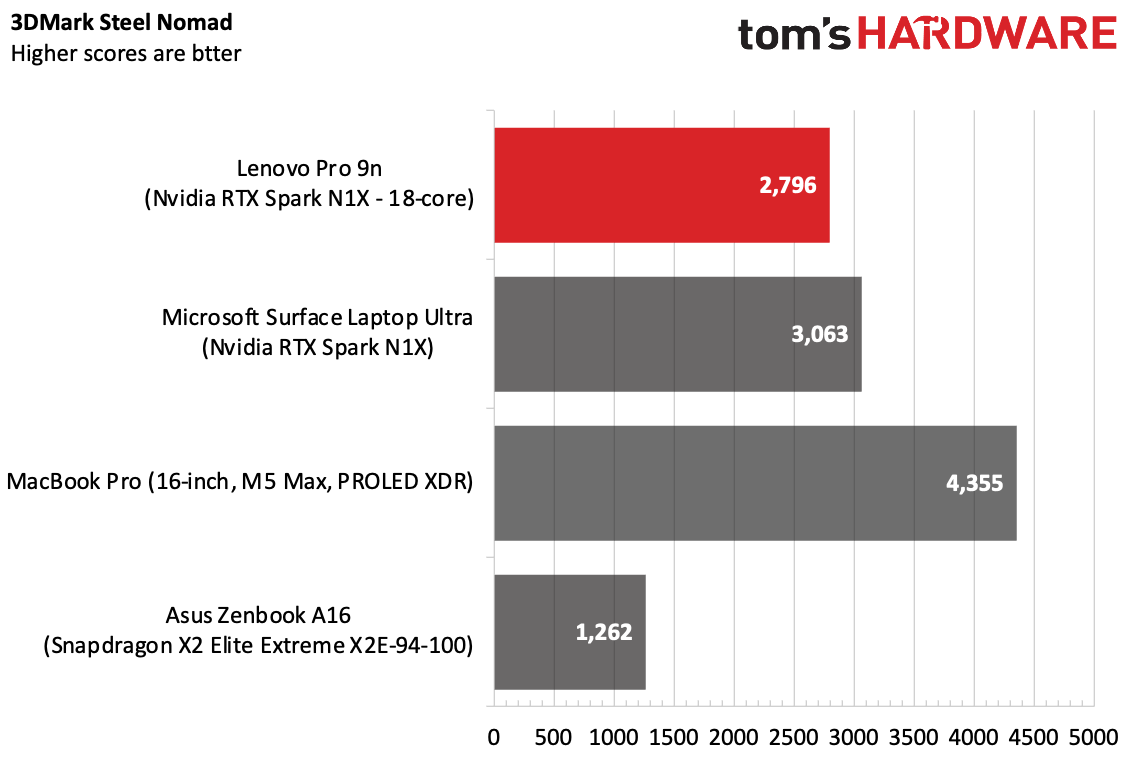
The 5,120 CUDA core configuration in the tested unit falls short of the 6,144 cores in the Surface Laptop Ultra's more powerful variant. On 3DMark Steel Nomad, the Pro 9n scored 2,796, trailing the Laptop Ultra at 4,355 and the MacBook Pro at 3,865, though it outpaced the Zenbook with Snapdragon X2 Elite Extreme at 1,262.
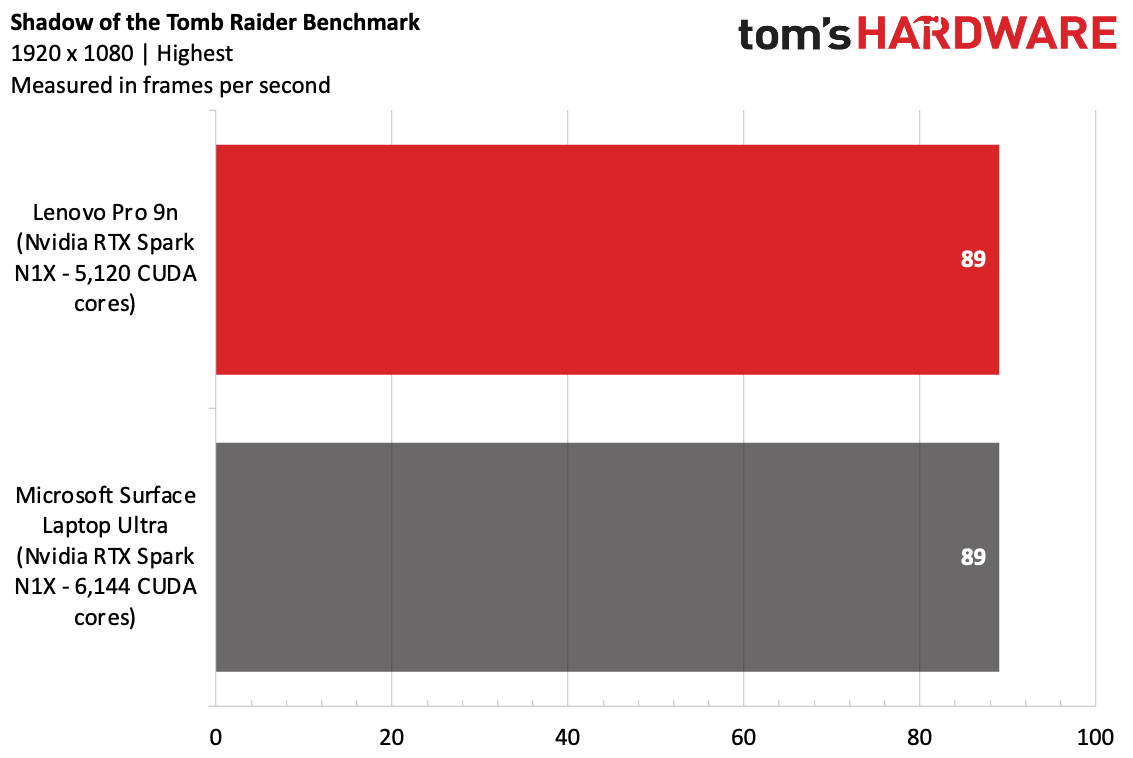
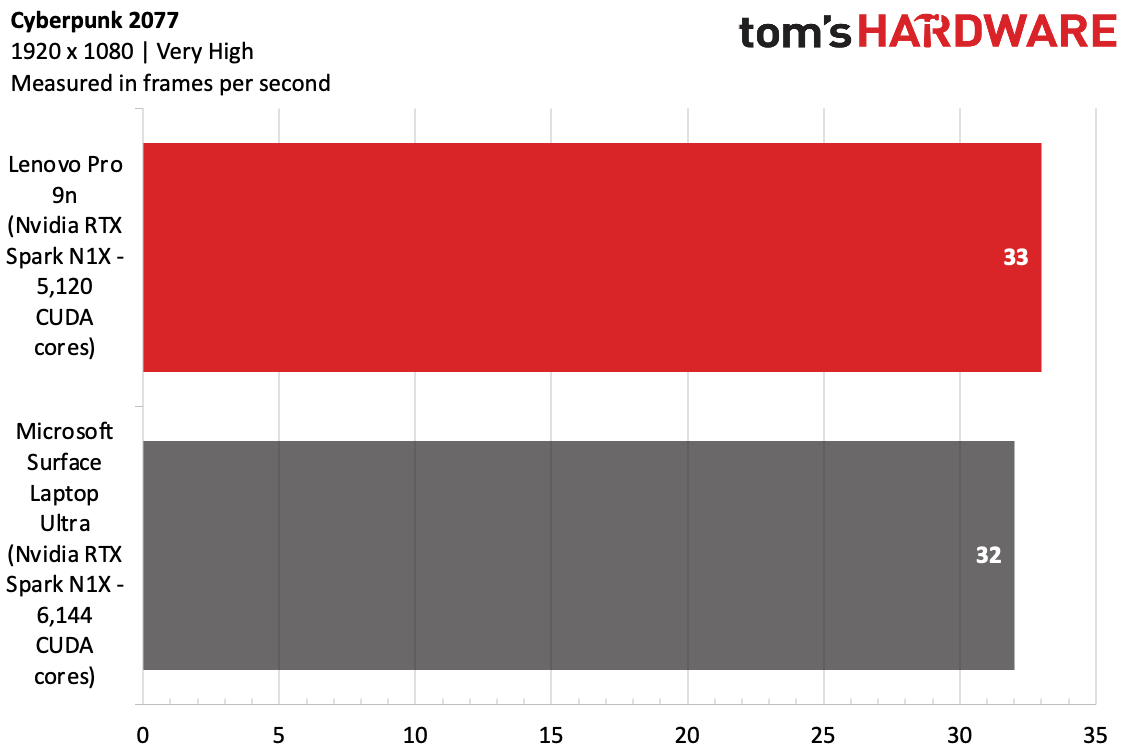
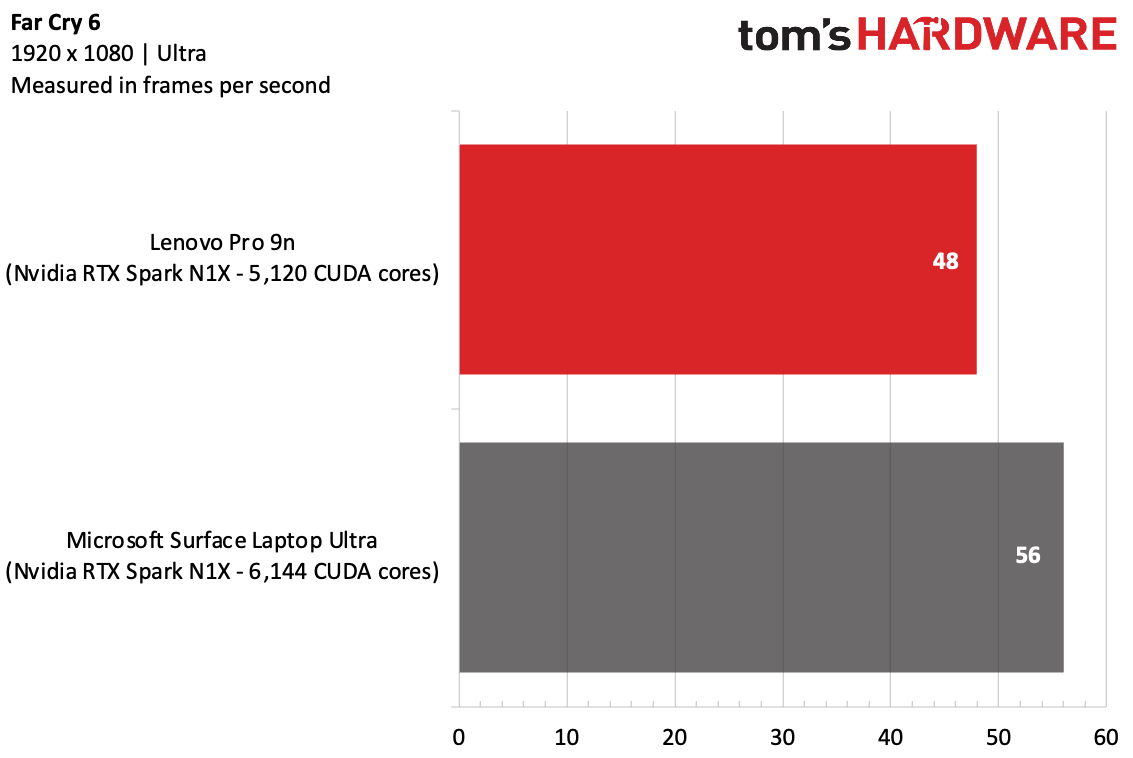
The RTX Spark targets 1080p gaming, with 1440p possible depending on the title. In benchmarks, the CUDA core difference produced negligible variance on Shadow of the Tomb Raider and Cyberpunk 2077, though Far Cry 6, which leans more heavily on CPU resources, ran better on the 20-core RTX Spark. Playing 007: First Light at 1920 x 1200 on medium settings with DLSS set to ultra performance yielded just over 30 frames per second. Switching DLSS to dynamic mode improved fluidity to between 40 and 72 frames per second as the player character moved through a luxury hotel, though stuttering occurred intermittently. Load times extended considerably, possibly due to Windows Prism emulation overhead.
Display Quality
The 15.3-inch OLED touchscreen with 165 Hz refresh rate delivers vivid imagery and sufficient brightness for typical tasks. Testing with the Artificial trailer demonstrated the panel's color range and black levels as the footage transitioned from outdoor greens to a dark tunnel and finally to a bunker lit by blue lights that appeared to leap from the screen.
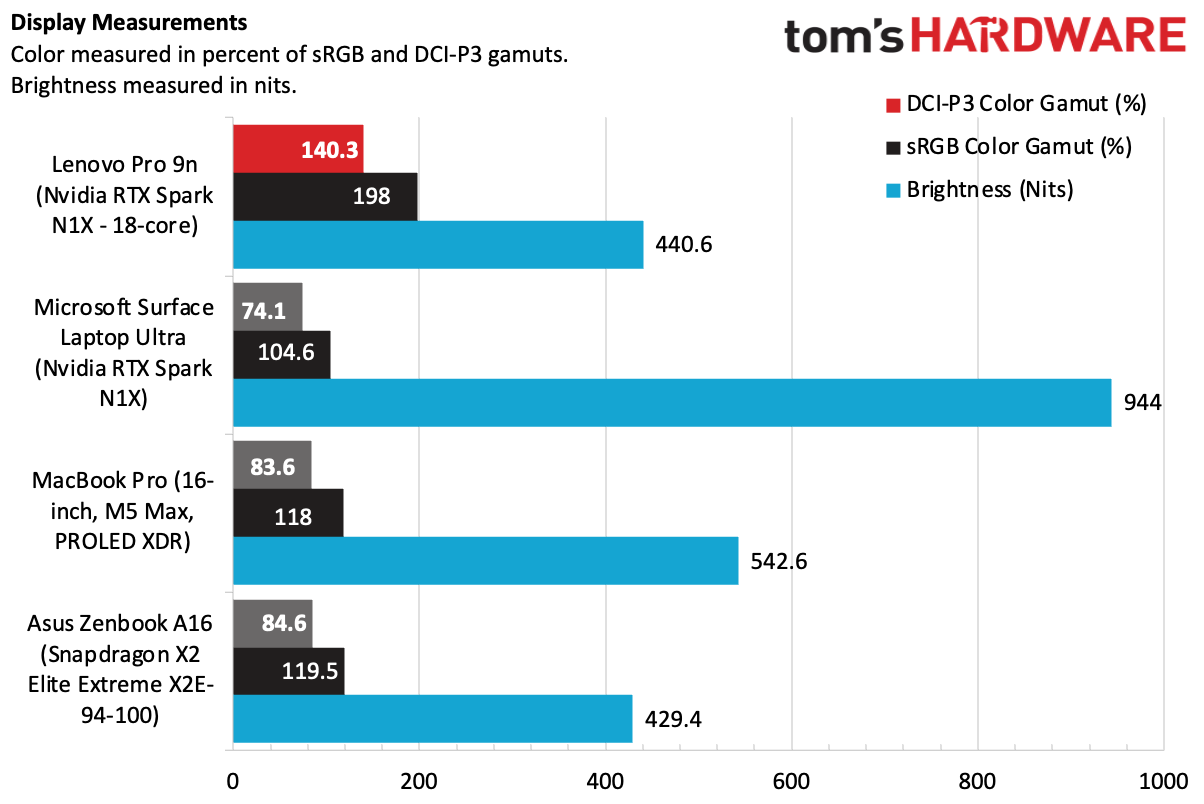
Colorimeter measurements showed Lenovo's OLED panel covering 198% of the sRGB color space by volume, substantially exceeding competitors, though the panel often appeared oversaturated—particularly evident in the default wallpaper with pronounced green and white tones. The MacBook Pro's PROLED XDR measured lower on the colorimeter but rendered colors more naturally. At 440.6 nits of brightness, the Pro 9n's display trails the MacBook Pro's 529.5 nits and significantly lags the Surface Laptop Pro's exceptional 944 nits.
Keyboard, Touchpad, and Stylus
Lenovo's keyboard delivers satisfying tactile feedback with 1.5 mm of key travel that feels deep yet responsive. Keycaps present a slippery surface; typing speed reached 106 words per minute on the monkeytype test, though accuracy dropped 2% below baseline. The haptic touchpad spans a generous area, offering smooth and responsive tracking. Despite haptic feedback, a noticeable physical depression occurs when clicking, particularly at the bottom edge—an odd sensation given that Windows allows customization of click pressure sensitivity.
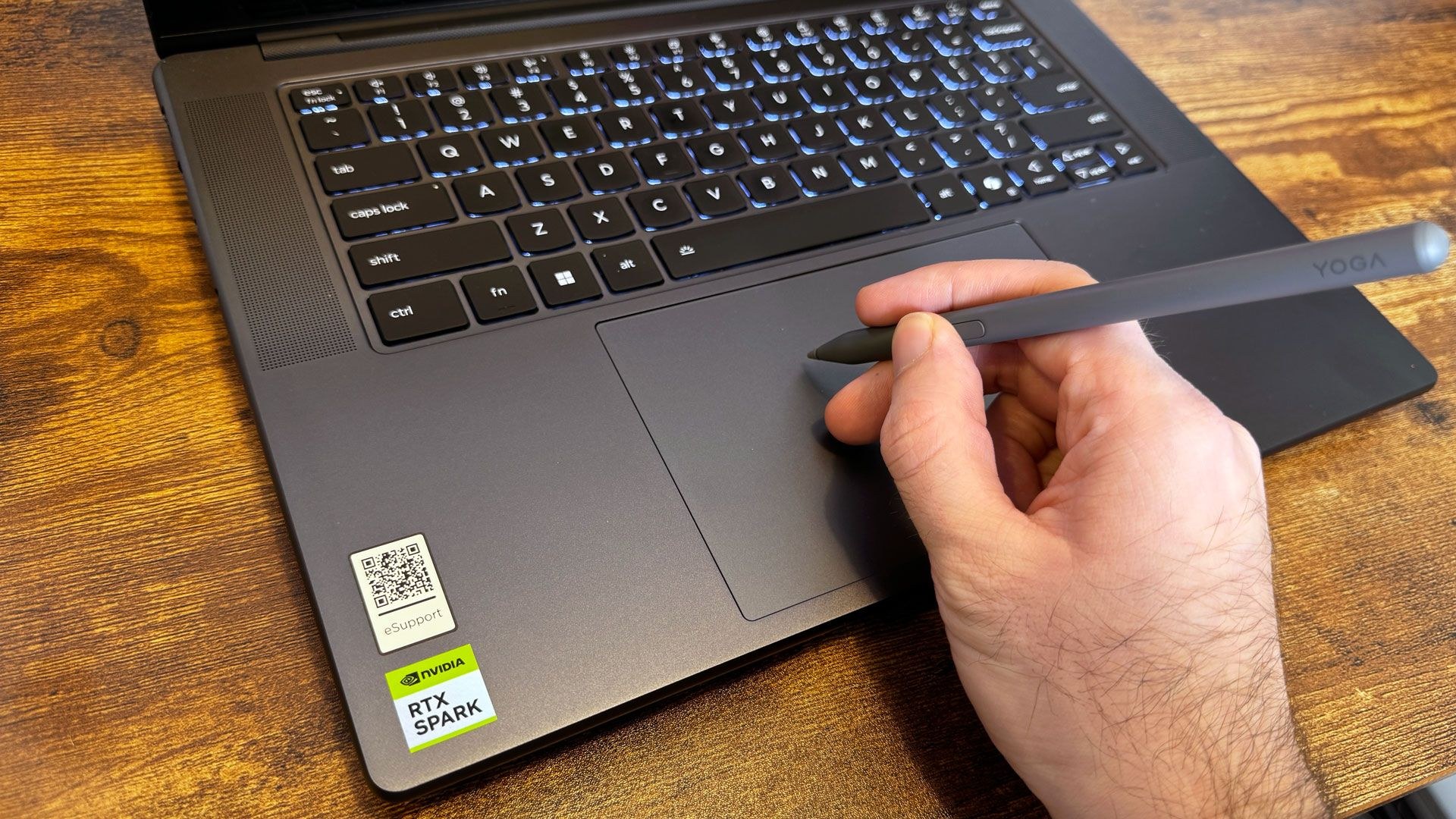
Lenovo includes a stylus for touchscreen interaction, useful for document signing, though the pen does not function on the touchpad—an unusual limitation. The separately sold Yoga Pen Gen 2 (typically $63 with an included case not provided here) attaches magnetically to the lid and charges via USB Type-C, enabling use of the laptop's charger. The stylus supports up to 8,192 pressure sensitivity points with AES3.0 or 4,096 points via other protocols.
Audio Performance
A two-tweeter, two-woofer configuration produces adequate volume, easily filling a mid-sized office with Justice's "Flower In A Hurricane." Guitars and synthesizers rendered clearly, as did vocals from SZA and Kevin Parker, though the drum beat registered as subdued. Accessing the Dolby Settings app and switching to the Warm music preset with boosted low frequencies corrected this imbalance.
Upgradeability and Internal Access
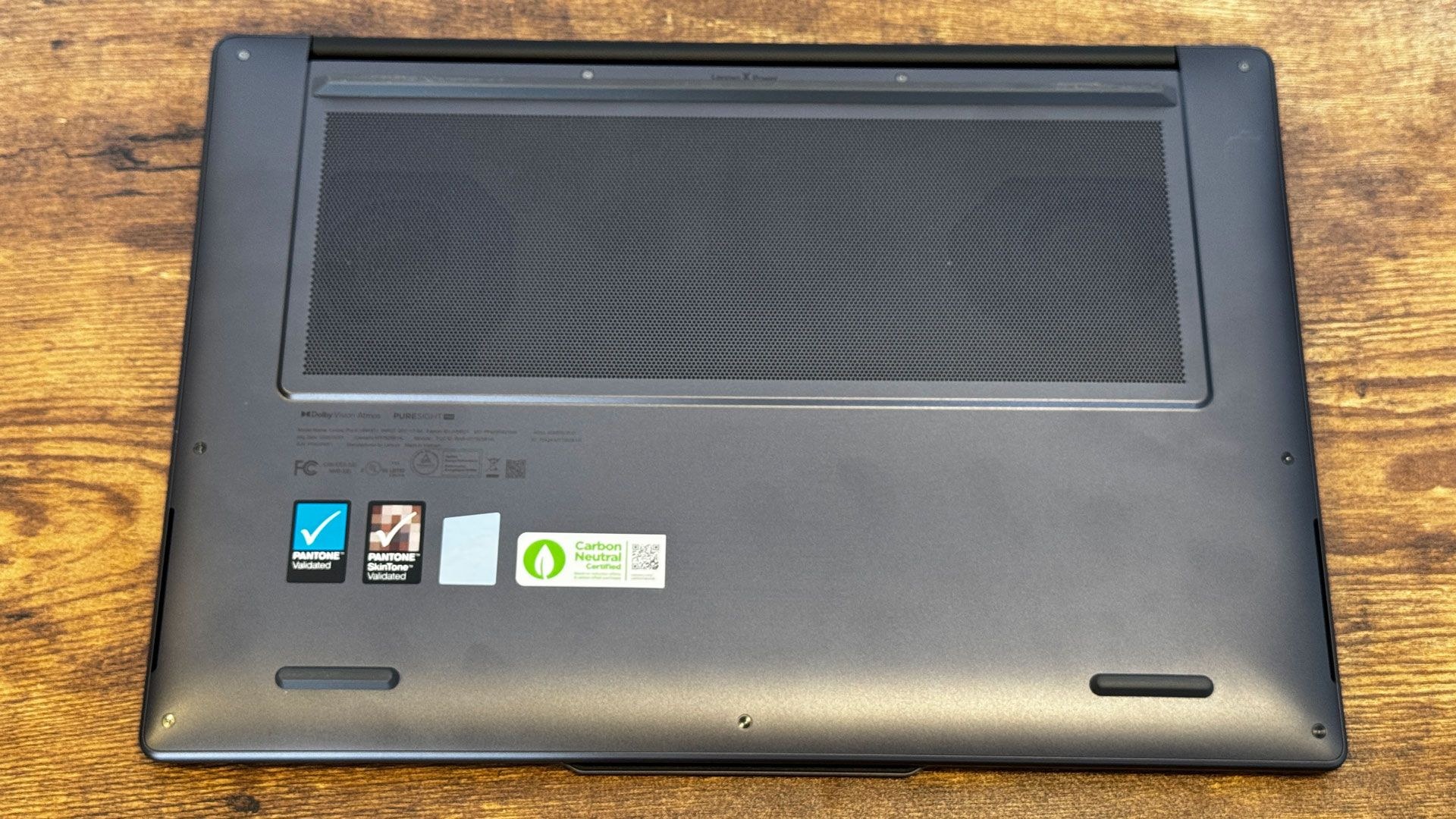
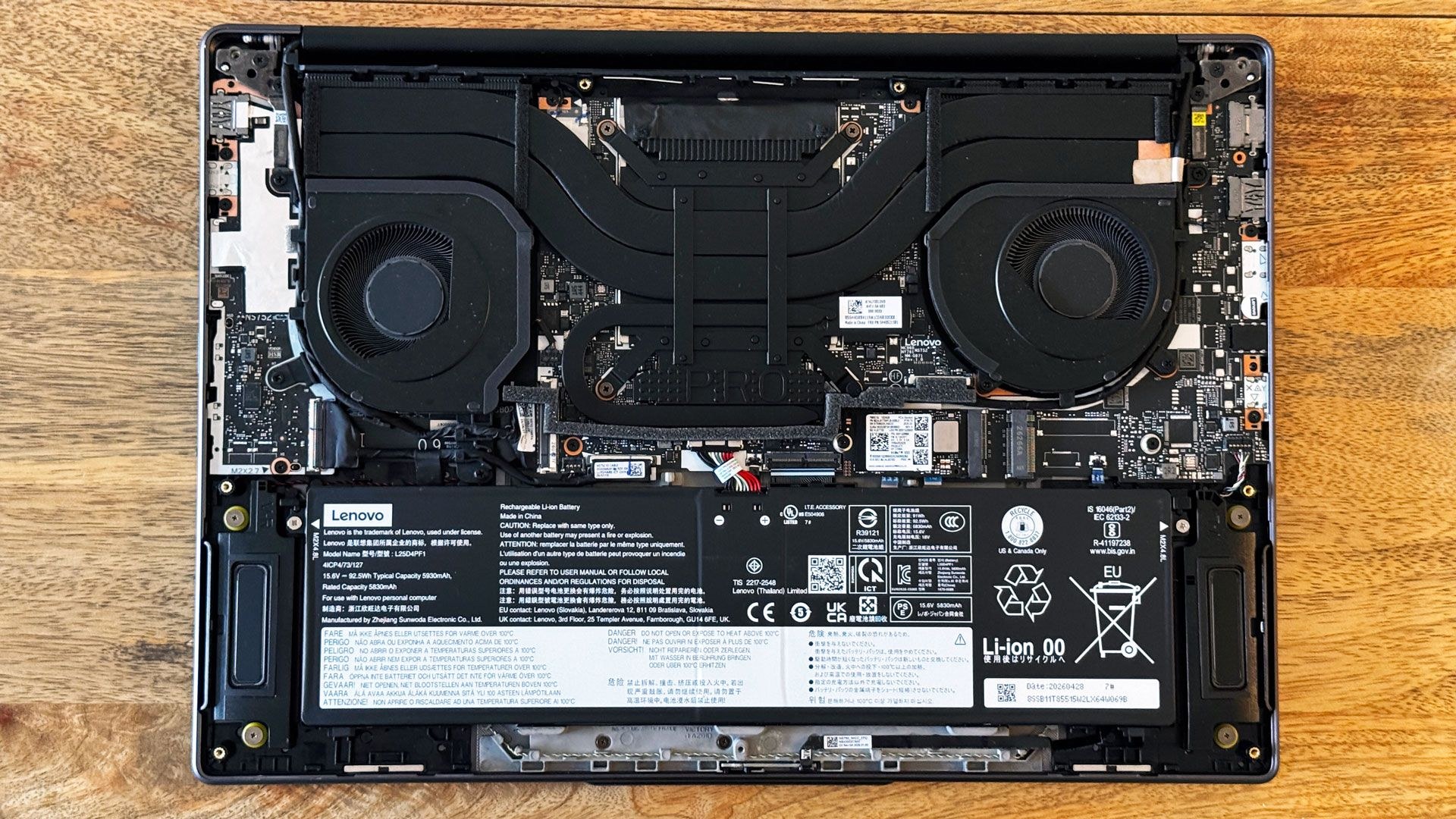
Nine screws secure the Pro 9n's bottom panel, with the four closest to the hinge being longer than the remaining five—organization matters here. Pry tools are necessary to release latches and remove the base. Inside, repair and upgrade options for typical users remain limited. The 92.5 WHr battery attaches via screws, and the M.2 2242 SSD is readily accessible, with a second bay available for an additional drive of the same length. While a standard 2280 form factor would be preferable, the 2242 configuration may enable dual-drive support or future expansion. The Wi-Fi card is soldered to the motherboard and partially obscured by thick heat pipes from the heatsink.
Battery Life
The Pro 9n achieved 10 hours and 30 minutes on the battery test, which involves web browsing, video streaming from a server, and OpenGL tests with the screen set to 150 nits. This performance edges out the Snapdragon X2 Elite Extreme-based ZenBook A16 by 4 minutes and trails the Surface Laptop Ultra with its more powerful N1X variant by 13 minutes. The MacBook Pro substantially outperformed all Windows on Arm systems, running for 15 hours and 57 minutes.
Thermal Behavior
During Cinebench stress testing, skin temperature measurements indicated the keyboard center reached 98.5 degrees Fahrenheit, the touchpad measured 10 degrees cooler, and the hottest point on the bottom chassis hit 101.5 degrees Fahrenheit. Internal sensor data remains unclear due to incomplete HWinfo updates, preventing precise identification of which components generated these readings.
Webcam
The 9.2-megapixel camera should suffice for 4K video calls on compatible platforms. During testing, the camera captured fine details such as graying hair at the temples with reasonable clarity, though color rendering skewed cool, lacking the vibrancy and warmth needed for a more lifelike appearance.
Software and Warranty
The Pro 9n ships with excessive pre-installed software. Vantage serves as the central hub, consolidating serial numbers, user guides, warranty status, device settings, and support access, but it also displays numerous advertisements. Direct Start menu and taskbar links direct users to Lenovo's subscription software portal. Smart Connect enables pairing and file transfer between laptop, tablet, and phone with a unified dashboard. Additional apps include stylus settings and a Start Menu link to an AI policy document that reads more like internal material than consumer-facing content.
Bloatware includes trials of McAfee antivirus and a promotional Dropbox trial. Running Windows on Arm, the Pro 9n benefits from improvements to the platform, yet occasional lag persists. Compatibility for games and applications has expanded but remains incomplete. Lenovo provides a 1-year warranty with optional extended coverage available for additional cost.
Configuration Options and Pricing
The review unit cost $3,249.99, equipped with the 18-core RTX Spark CPU, 5,120 CUDA core GPU, 32GB RAM, 1TB PCIe Gen 4 SSD, and Windows 11 Pro. The base model starts at $2,999.99 with identical processor and RAM but Windows 11 Home and 512GB storage. Upgrading to the 20-core, 6,144 CUDA-core variant adds $450 and includes 64GB RAM and 1TB storage as standard. Moving to 128GB RAM costs an additional $1,400, while a 2TB PCIe Gen 5 SSD upgrade runs another $450.
Verdict
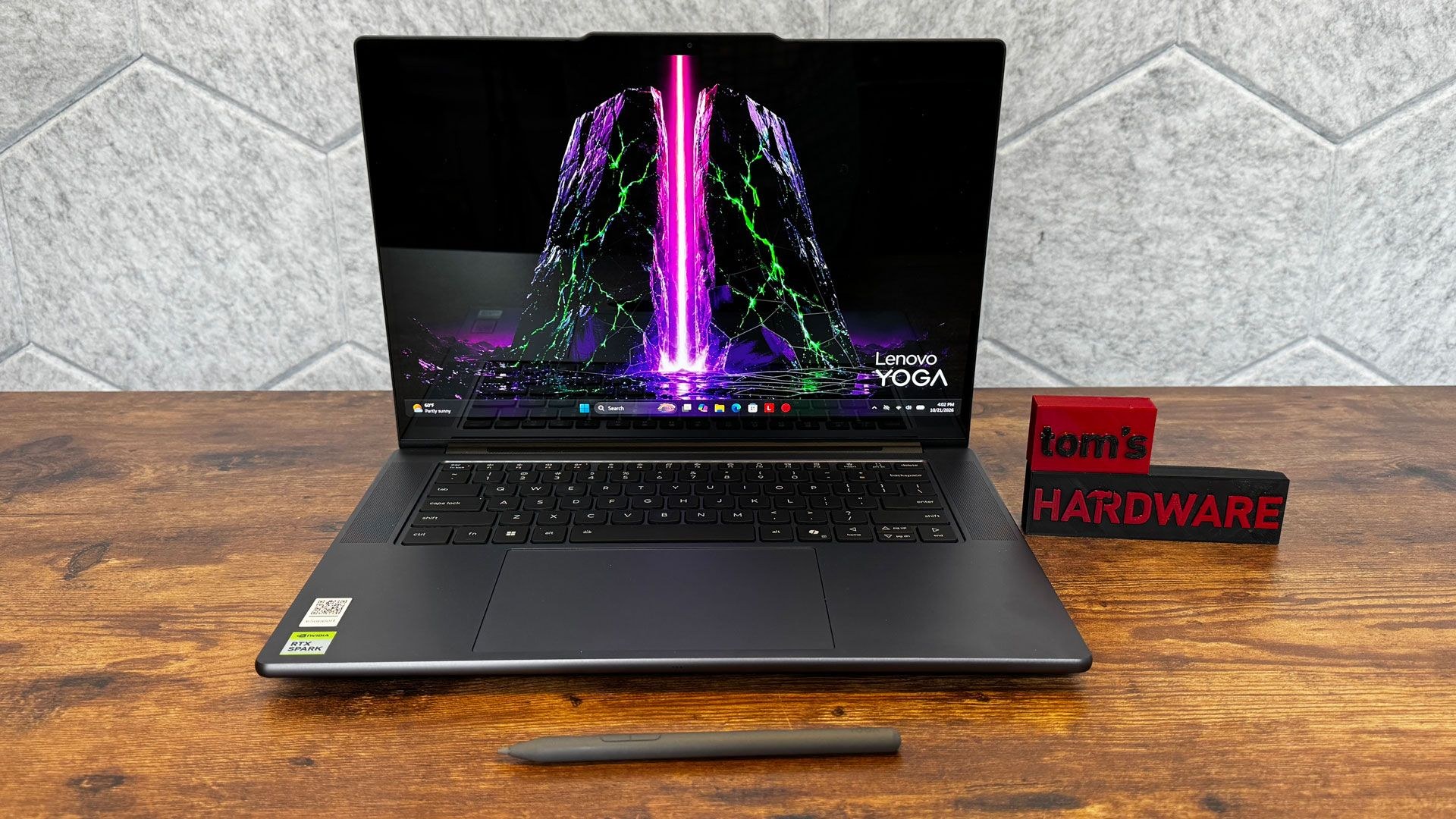
The Pro 9n represents a streamlined RTX Spark laptop with robust port selection and an excellent OLED display. The keyboard delivers satisfying travel distance, and the minimalist design stays out of the way during work. However, the price remains steep even at the base RTX Spark tier. Battery life just exceeds 10 hours—a shortcoming across the RTX Spark platform—and Windows lacks AI-specific features that would justify this chip for users not running local models.
Against the Surface Laptop Ultra, the Pro 9n wins on three fronts: it's lighter, features an OLED screen, and includes extra SSD slots (albeit M.2 2242 form factor) for future upgrades. The Surface maintains a more refined, premium design and includes the convenient magnetic Surface Connect port. Those uninterested in local model execution should explore cheaper alternatives. Battery-conscious users should consider a Mac. Windows on Arm enthusiasts might still prefer Snapdragon X2, as Nvidia's entry into this competitive space should benefit the entire ecosystem.