Developer cools iPhone 18 Pro with La Croix can, achieves 25% sustained performance boost
Matt Birchler's unconventional thermal management experiment demonstrates how external cooling can mitigate the A20 Pro's throttling behavior during intensive workloads.
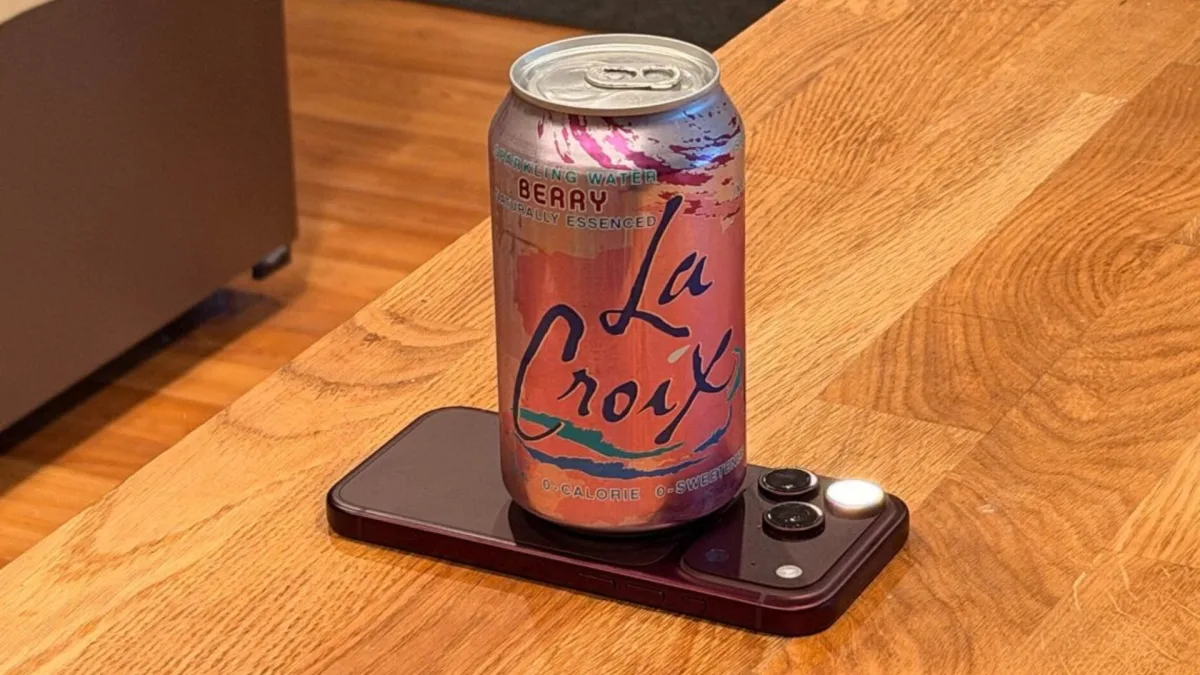
Developer and tech enthusiast Matt Birchler conducted an experiment using a cold can of La Croix sparkling water as a makeshift cooling solution for an iPhone 18 Pro, addressing thermal throttling issues he had observed in earlier testing sessions. The improvised approach yielded surprisingly substantial results, delivering a 25% improvement in sustained performance across multiple benchmark runs.
Birchler's testing focused on the A20 Pro processor powering the iPhone 18 Pro, which demonstrated strong performance in standard configurations. During initial benchmarking without external cooling, the device achieved a peak speed of 447.9 words per second before declining to just over 320 words per second in runs seven through twenty. This performance degradation during extended workloads is typical across portable devices, as they intentionally reduce clock speeds to prevent thermal damage to internal components.
Desktop and laptop systems typically employ sophisticated cooling solutions—ranging from high-end CPU coolers to custom water-cooling loops—to maintain peak performance under sustained loads. Smartphones generally lack such options, with the exception of specialized gaming devices like the Redmagic 11 Pro, which incorporates liquid cooling. Birchler's approach offered an alternative path. "I did some benchmarking today and saw how the newest iPhone thermal throttles, which isn't severe, but does happen," Birchler explained. "I know from experience that if you put a cold beverage on the back of your phone, it will cool down really quick, so I thought…the test is obvious."
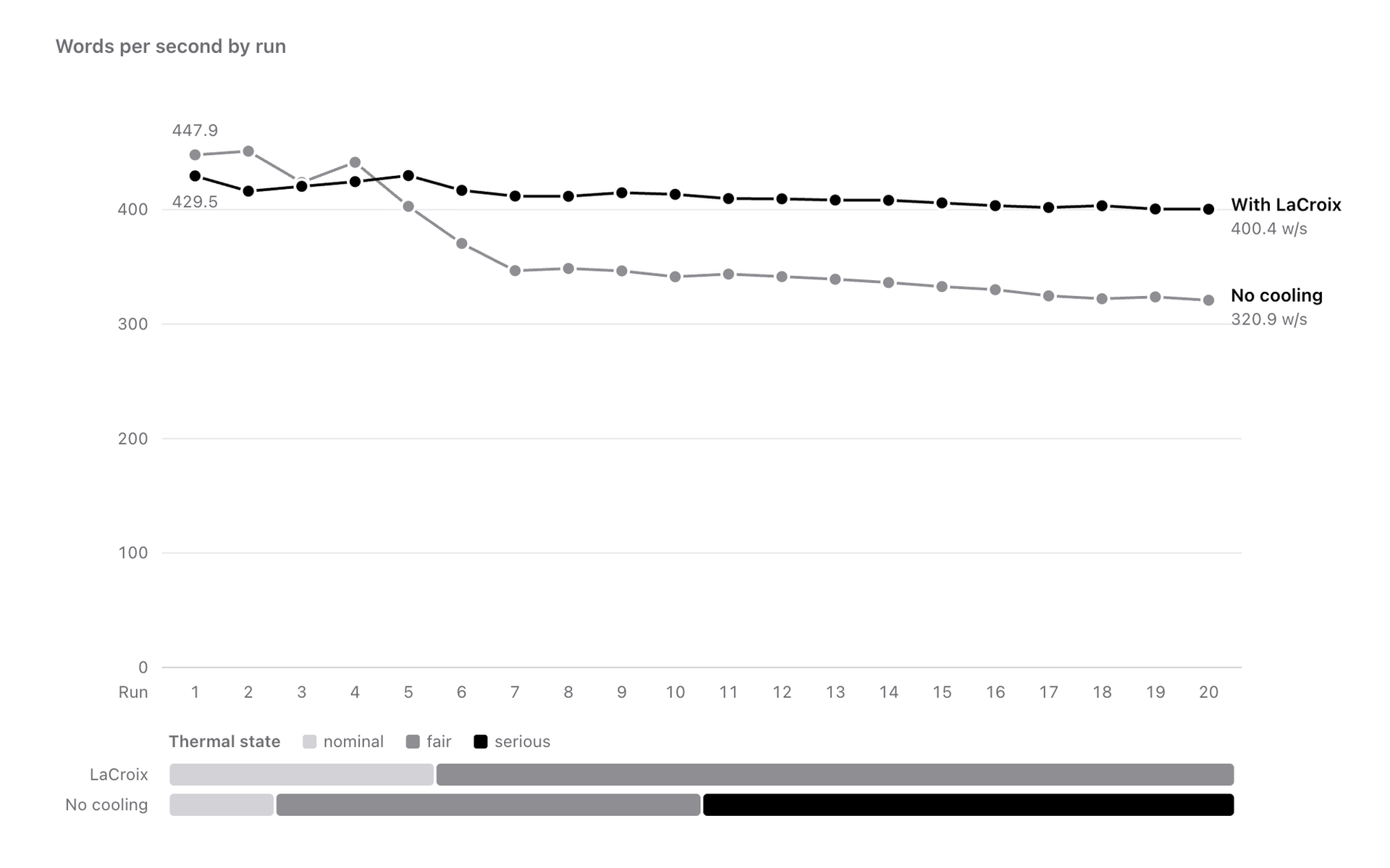
For his experiment, Birchler retrieved a freshly chilled La Croix can from the refrigerator and initiated a twenty-run benchmark sequence while positioning the can against the phone's rear surface. The results aligned with his hypothesis: while the initial run produced a marginally lower score of 429.5 words per second, the externally cooled device maintained an average of 400.4 words per second across all runs. This represented approximately 25% higher sustained performance compared to the throttled baseline, though the phone had to remain face-down throughout the testing period.
Most users will never require such cooling interventions during typical smartphone usage. However, those engaging in demanding activities—extended gaming sessions, intensive photo and video capture, or professional editing workflows—may experience noticeable performance drops and screen dimming after several minutes of operation. While Birchler's La Croix method technically works, it remains impractical for everyday use; holding a phone with a beverage can protruding from its back presents obvious ergonomic challenges.
Accessory manufacturers have developed purpose-built solutions addressing this gap. Gaming-focused options include the Black Shark Magnetic Phone Cooler 6 Pro, while content creators can turn to devices like the SmallRig Universal Hyper Chill Cooling Phone Cage or the Tilta Khronos Advanced Kit. Independent enthusiasts have also experimented with custom designs, such as an elaborate SSD cooling apparatus mounted to an iPhone 17 Pro Max. These specialized coolers enable performance extraction beyond standard thermal limits, but introduce trade-offs including added bulk, increased weight, and reduced battery longevity.