Federal Court Blocks Trump Administration's Emergency Coal Plant Orders
A three-judge appellate panel has struck down the Department of Energy's use of emergency powers to keep a Michigan coal plant operating, finding no legitimate crisis to justify the intervention.
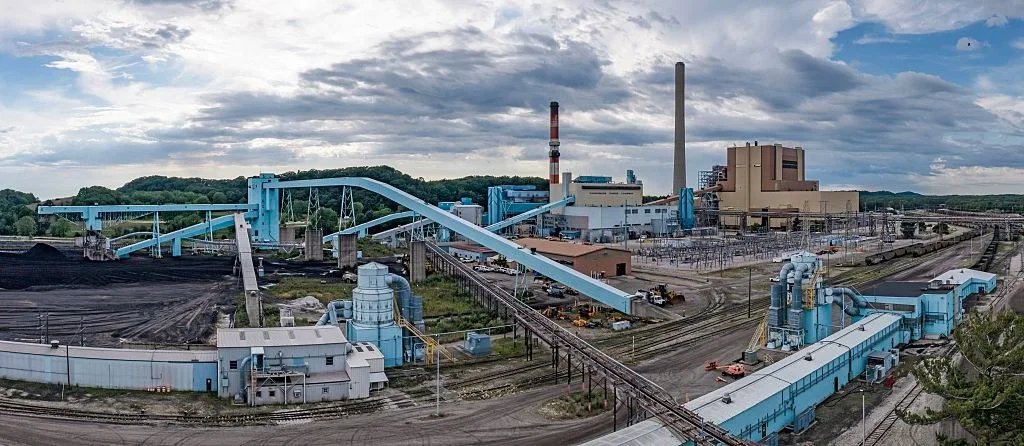
For nearly two decades, coal's share of U.S. electricity generation has declined steadily, a trend that proved resistant to efforts during the first Trump presidency. The current administration has pursued more forceful strategies to reverse this decline, with one of the most direct tactics being mandated extensions of coal plants scheduled for retirement. On Friday, a federal appeals court rejected this approach in the first major legal challenge to reach adjudication, determining that the Department of Energy lacked statutory authority for such orders.
The DOE grounded its directives in a statute permitting the department to declare emergencies during wartime or when sudden generation shortfalls threaten the grid. Multiple parties—including states and environmental advocates—have contested these declarations. The DC Circuit Court of Appeals issued a unanimous decision from a three-judge panel that found the emergency claim incompatible with the statute's requirements. Though the ruling directly addresses only the J.H. Campbell Generating Plant in Michigan, the court's legal reasoning will extend to every coal facility the DOE has ordered to remain operational.
No emergency
The J.H. Campbell facility was scheduled to retire in the previous year but has remained open through five consecutive DOE emergency declarations, each lasting 90 days under the Federal Power Act's constraints. The legal dispute centered on section 202(c) of that statute, which permits DOE emergency declarations when the nation faces war or when "an emergency exists by reason of a sudden increase in the demand for electric energy, or a shortage of electric energy."
Michigan officials and environmental groups challenged whether any genuine emergency existed. They highlighted the plant's age, inefficiency, and severe environmental impact—the court noted estimates suggesting its emissions would cause approximately 30 deaths annually. The state had initiated closure discussions years earlier, but the utility commission implemented a formal review process to protect grid reliability. The process included public hearings, state court appeals, and evaluation of replacement power sources that would be both cheaper and cleaner.
Regulators approved the retirement plan only after determining it would not compromise service. MISO, the grid operator managing territory from Louisiana through Minnesota, also reviewed and approved the closure strategy.
The government presented two pieces of evidence to support its emergency claim. First, it cited a report indicating MISO faced potential low generating reserves, which utilities typically maintain for unexpected disruptions. However, the court observed that the same report acknowledged MISO possessed "adequate anticipated resources" for "peak load conditions" and applied only to 2024 conditions. The second item was a presentation suggesting summer posed the greatest grid risk, which the court characterized as merely a seasonal observation rather than a genuine assessment of grid status.
The judges concluded the DOE had failed to demonstrate the type of critical supply shortage conventionally understood as an emergency, leaving unresolved whether the statute demanded such specificity for government action.
Not the DOE's job
The decision extensively examines how U.S. electricity regulation has historically been structured. With rare exceptions, states retain authority over generation capacity, while federal involvement focuses on interstate transmission infrastructure. The same Federal Power Act at issue here, for instance, "expressly denies [Federal Energy Regulatory Commission] authority to regulate generation facilities directly."
The court interpreted this framework as reflecting congressional intent that federal intervention in generation facilities should be exceptional and limited to situations involving immediate shortfalls requiring federal remedies. The decision notes this approach has characterized the authority's actual use throughout its history. "Indeterminate assertions of summer electricity shortfalls are not what Congress meant by 'emergency,'" the judges stated.
In this instance, the closure resulted from deliberate planning that included provisions for replacement generation capacity. "Permitting DOE to compel generation in a situation that can be resolved through the ordinary resource adequacy planning mechanisms or a request under section 202(b) would render meaningless the constraints on federal power that Congress imposed throughout the Act," the decision concluded.
The court therefore invalidated the DOE's emergency declaration. Unless reversed on appeal, Michigan can proceed with its planned retirement process, eliminating ongoing costs to local ratepayers for maintaining the coal facility in operational readiness.
The broader implications may prove more consequential. The same legal framework will govern all instances where the DOE has compelled plant continuations. Assuming the decision survives appellate review and challengers emerge for other cases, the Trump administration's other coal plant extensions and potentially additional actions relying on the same emergency authority face likely reversal. The DOE issued more than 55 emergency orders during 2026 alone—more than double the total issued between 2000 and 2025.