Solar's Cheap Revolution Upends the Global Power Grid
Plummeting panel costs have sparked a worldwide shift toward rooftop solar and distributed generation, but utilities and grid operators are scrambling to manage the upheaval.
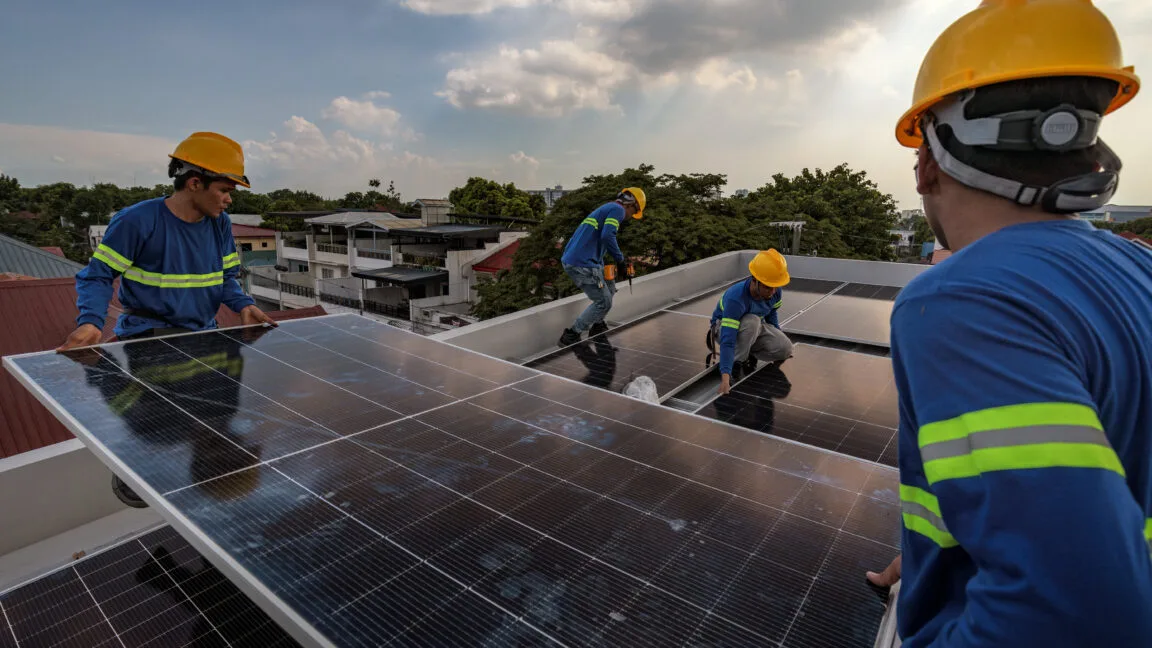
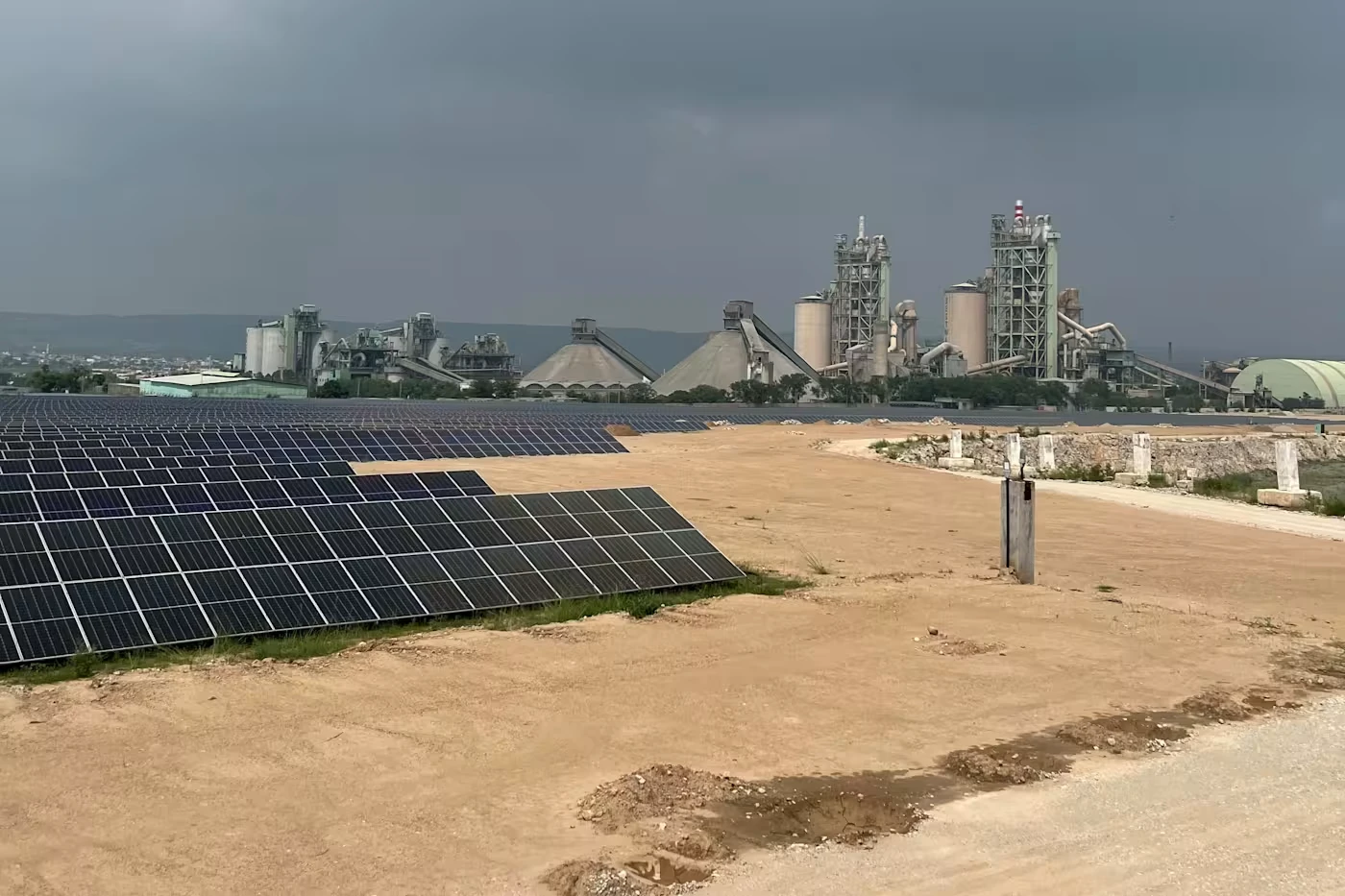
In the arid terrain near Chakwal in north-central Pakistan, Bestway Cement is converting barren land and agricultural groves into sprawling solar installations. The company plans to bring 6.34 megawatts online by year's end, supplementing its existing 26 MW of photovoltaic capacity. Solar now supplies more than a quarter of the electricity consumed at its cement manufacturing facility.
"It's the only way we can compete," explains Abdul Waheed, general manager at the Chakwal plant, which produces over 3 million tonnes of cement annually. "Our rivals have already gone in this direction."
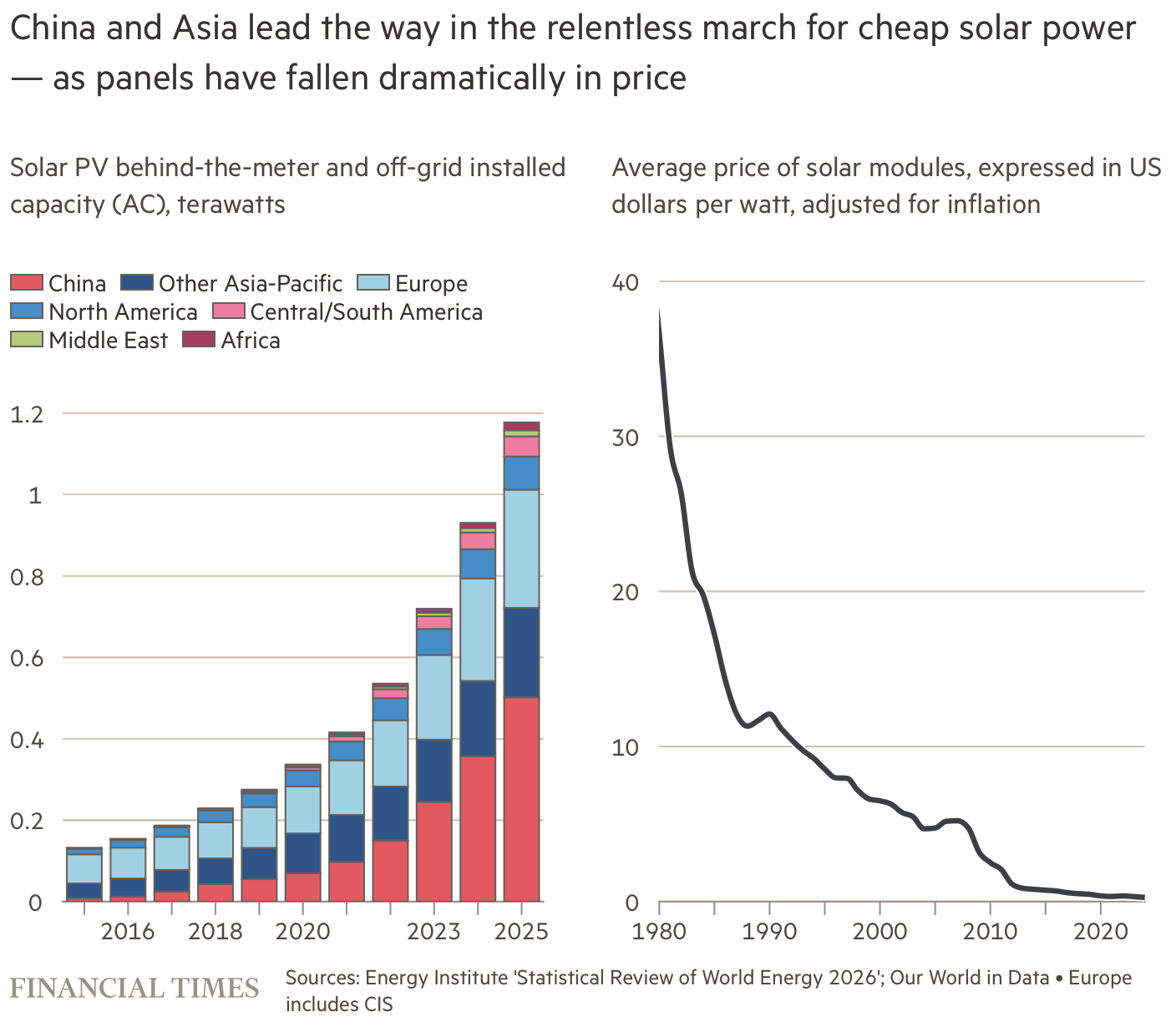
Bestway and countless other industrial and residential operators worldwide have embraced solar technology, propelled by an influx of inexpensive components manufactured in China. By the close of 2025, global solar capacity reached nearly 1.2 terawatts, per the Energy Institute's Statistical Review of World Energy. Though solar's intermittent nature limits actual output to a fraction of theoretical capacity, this figure represents roughly triple the installed base of nuclear power globally.
The affordability revolution in photovoltaic panels—coupled with the rise of decentralized power generation—is reshaping electricity systems across developing and developed economies. In poorer regions, millions now enjoy dependable electricity access through their own installations rather than relying solely on centralized infrastructure. Globally, consumers benefit from cleaner power sources and lower electricity expenses at a moment when cost-of-living pressures remain acute, exacerbated by geopolitical conflicts in Iran and Ukraine.
Yet this unprecedented surge in distributed energy introduces complications. Power grids were engineered for centralized generation flowing outward to consumers, not for bidirectional flows from millions of rooftop sources. Investment priorities, pricing mechanisms, and supply security face disruption as a result.
In numerous countries, residential and small-business solar deployment is eroding the financial viability of traditional utilities precisely when they must undertake costly grid modernization to accommodate two-way power flows. The United Kingdom and several American states have recently authorized sales of compact "plug and play" solar units already common elsewhere in Europe. Critics worry these devices, which connect directly to household wiring, will introduce further unpredictability into demand forecasting and grid management.
A prolonged blackout affecting Spain and Portugal last year underscored the stakes. Professor Janusz Bialek of Imperial College London noted in recent research that while renewables did not directly trigger the outage, Spain had neglected to adapt its grid infrastructure to accommodate their expansion. "The rapidly increasing share of renewables in many power systems causes a profound change in the way power systems behave which we do not yet fully understand," he wrote.
Josefin Berg, research manager for solar and energy storage at S&P Global, characterizes the transformation as fundamental: "completely transforming the system from the centralized structure to something where anyone can produce power." She raises a critical question: "Distribution grids may not always be prepared to take a big influx of electricity… and if you have more and more solar and batteries, reducing the sales of electricity for the grid, who is paying for the grid charges?"
Syed Muhammad Taha, chief executive of K-Electric, which supplies 20 million residents in Karachi, Pakistan, captures the paradox succinctly. Solar panels represent both "a curse and a blessing" for his utility. The affluent Defence Housing Authority district below his office bristles with photovoltaic installations. "These are my best customers," he laments, "and they're opting for solar."
The Price Collapse
At the millennium's start, solar panels commanded $5–$6 per watt of capacity. Today they trade at roughly 12 cents per watt—a level Dave Jones, co-founder of think-tank Ember, describes as "offensively cheap."
China's manufacturing explosion accounts entirely for this decline. According to Wood Mackenzie, Chinese production capacity now stands near 1.36 terawatts, even as Beijing attempts to constrain output to prevent further price erosion. This cost reduction enabled massive domestic deployment and transformed solar from a subsidized technology favored by decarbonization-focused markets into an essential power source for regions where electricity is scarce, unaffordable, or unreliable. The transition began in countries including Pakistan, Brazil, and South Africa before spreading to other African nations and the Philippines.
Expanding Access in the Developing World
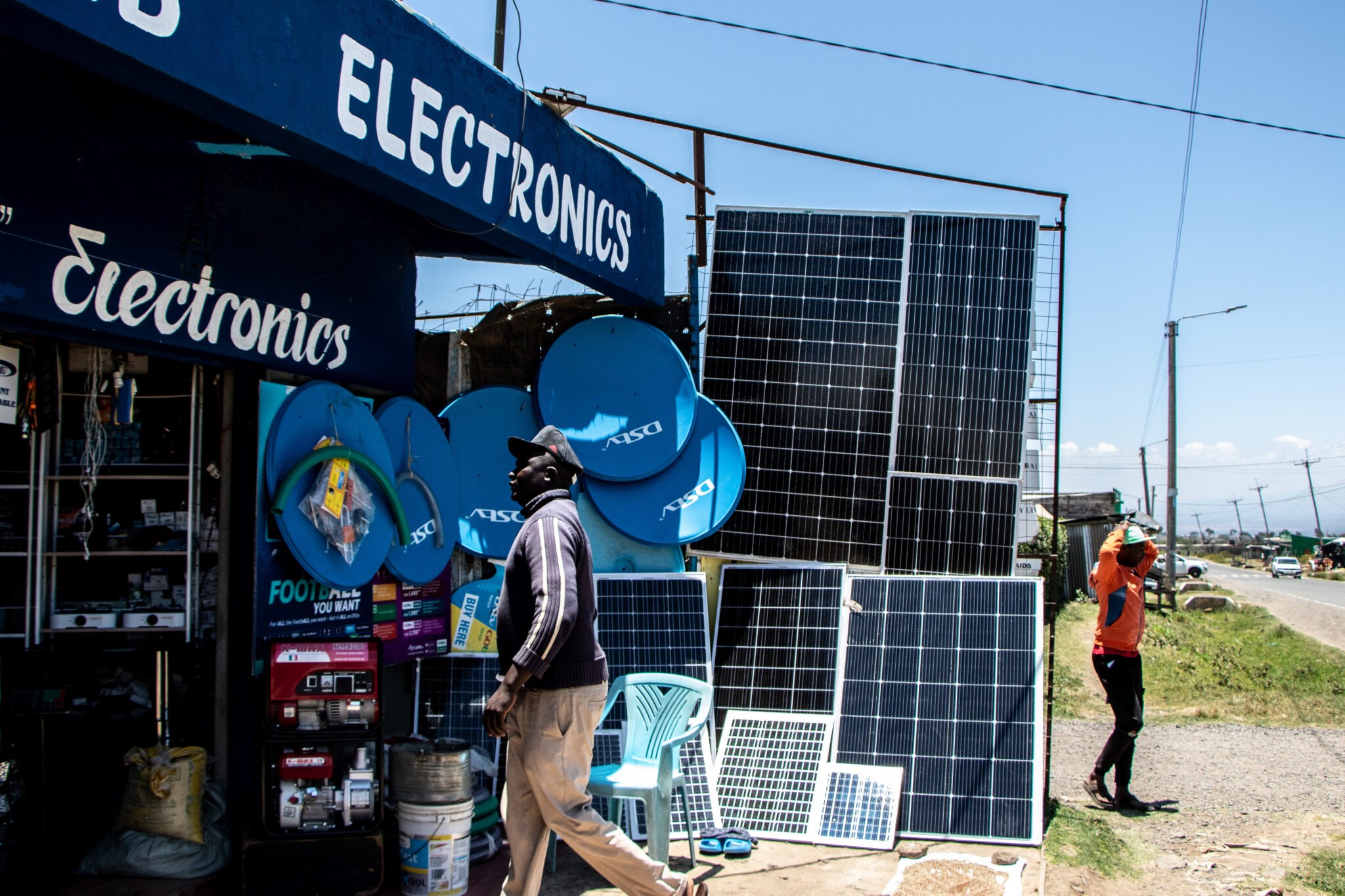
Ember's analysis of customs records suggests Africa will deploy approximately 17 gigawatts of new solar capacity this year, with the bulk consisting of small-scale installations at factories and other enterprises. "If you're a business, you're using electricity during the day—it's a natural fit for you to use solar," Jones observes.
Households benefit equally. "A home goes from burning two or three kerosene lanterns to a light that is 20 to 40 times brighter, [turned] on every day," notes Anish Thakkar, co-founder of Sun King, a Kenyan financing firm that helps families purchase solar and battery systems.
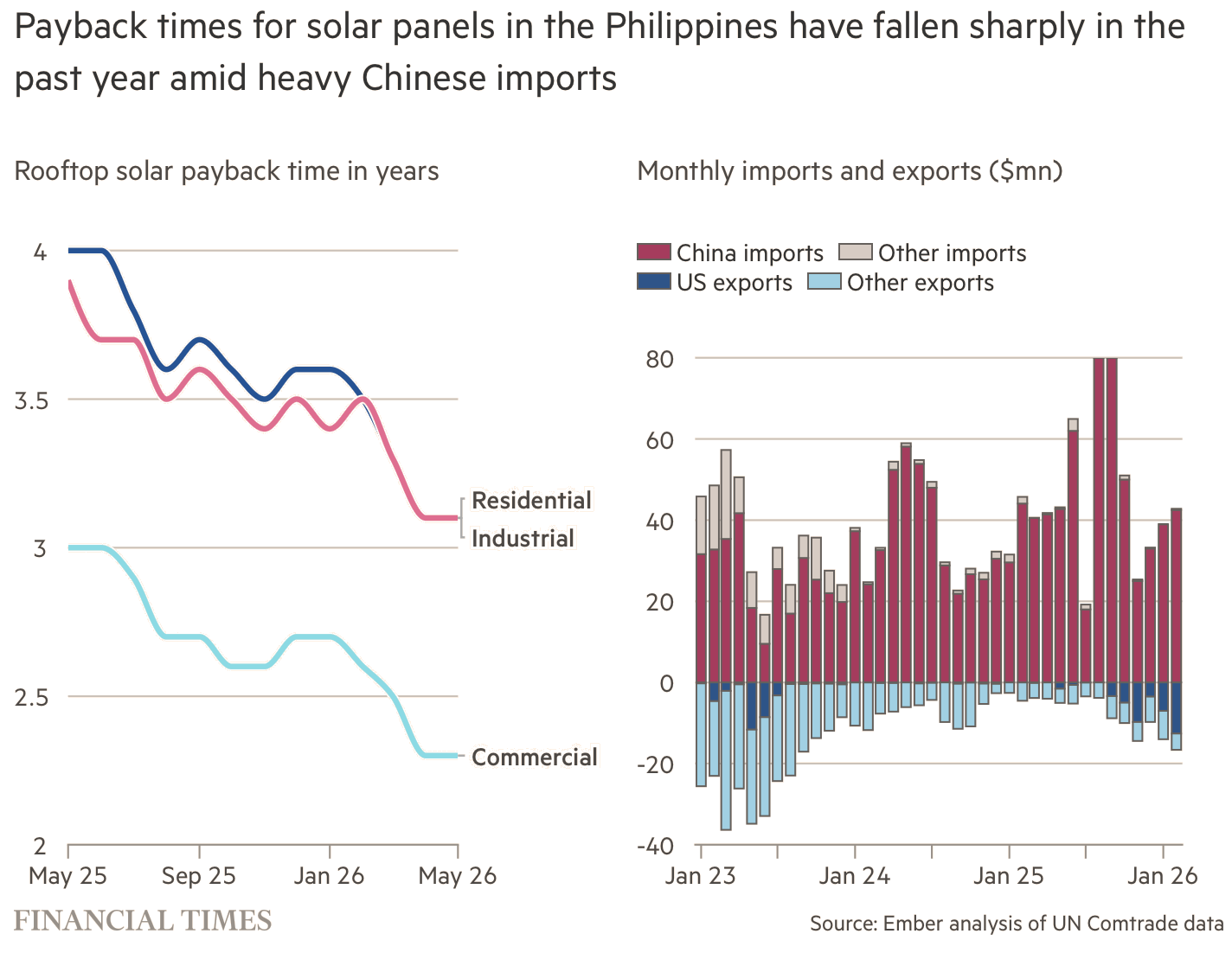
In the Philippines, rooftop solar capacity may have nearly doubled over the 12 months ending in April, according to Ember. Residential installations now recoup their investment in just over three years. The country's electricity distributor Meralco reported that rooftop solar generated 372 gigawatt hours during the first half of the year.
India's government-backed rooftop solar initiative, introduced in February 2024 with a budget of nearly $8 billion at current exchange rates, has installed panels on over 5 million homes and is adding roughly 500,000 monthly, according to Praveer Sinha, chief executive of Tata Power. "It's a democratization of the use of electricity," he says.
Geopolitical tensions have spurred rooftop solar interest in Britain, where households have been permitted since late August to purchase 800-watt solar panels from supermarkets and DIY retailers for direct home installation—a measure the government frames as providing "breathing space" on energy bills. Multiple American states have similarly streamlined household access, with New Jersey Governor Mikie Sherrill stating she was "laser-focused on driving down energy costs" while exempting the devices from metering rules. Plug-and-play panels are gaining traction in the United States despite President Trump's general opposition to renewables and his move to eliminate tax credits for rooftop solar systems.
Sanjeev Raghubir, head of sustainability at Shoprite, Africa's largest supermarket chain, says the company could "power an entire suburb" with panels installed on roofs and vehicles across South Africa and Namibia since 2015. Shoprite now commands around 43 MW of peak solar capacity and is evaluating battery storage options.
The Utility Crisis
What benefits Shoprite poses a mounting challenge for South Africa's state power utility Eskom. Rooftop solar and battery systems, predominantly deployed by businesses and wealthy households responding to chronic rolling blackouts, accounted for roughly 7 percent of the 11.7 terawatt-hour decline in Eskom's electricity sales for the year ending March. This loss compounds a steeper drop in industrial consumption driven by elevated prices.
Reduced revenues arrive as Eskom must maintain the grid infrastructure that enables daytime electricity exports and operate generation plants to bridge gaps when sunlight is absent or clouds obscure panels, or when stored battery power proves insufficient. "Everyone who has rooftop solar in any major city, they are still connected to the grid," notes Dan Marokane, Eskom's chief executive. "Three weeks ago… the whole country had to rely on Eskom generation for three days," he adds, citing extended cloud cover that slashed rooftop output.
Eskom is restructuring tariffs to separate network and energy charges, a shift analysts hope will improve pricing efficiency and facilitate market adaptation. Yet the utility faces a more existential threat: the "utility death spiral" already evident in Pakistan, where lower-income residents shoulder disproportionate infrastructure costs.
In Karachi's Defence Housing Authority, affluent residents with solar panels contrast sharply with poorer neighborhoods like Lyari, where non-payment rates are so elevated that K-Electric loses Rs30–Rs40 for every Rs100 spent supplying the area. Residents such as Azem Baloch, a mechanic in Lyari, face mounting bills as utilities attempt to recover costs from an earlier, poorly executed centralized generation expansion. Baloch and his family rent a flat in a deteriorating building unsuitable for panel installation. "I am spending more than half of my income on power," he says.
Tata Power's Sinha acknowledges the risk: "if paying consumers are going and the non-paying consumers stay with you, then it becomes a problem." He contends that India has mitigated this by directing support toward lower-income households while generating additional revenue from solar installations.
Grid Stability and Forecasting
The proliferation of rooftop solar in Africa raises fundamental questions about the future role of utilities and transmission infrastructure. "What should your grid look like in five, 10 years if you suspect that more demand is going to go 'behind the meter'?" Berg at S&P wonders. Dave Jones counters that "in a distributed [energy] world, you would need less" grid infrastructure overall.
Australia illustrates the technical challenges. Transmission system operators have confronted insufficient demand as consumers draw power from rooftop installations rather than the grid. Inadequate demand can impair the operation of certain power plants essential for system stability. In some states, energy companies are forced to give away excess midday generation.
Power injected from local distribution networks into transmission grids can trigger voltage increases that restrict household export capacity. Forecasting output from thousands of dispersed rooftop panels across a vast country presents mounting complexity, and prediction errors grow more consequential as installations proliferate.
"Perth, for example, is covered in rooftop solar," observes Pierluigi Mancarella, chair professor of electrical power systems at the University of Melbourne. "If you have a massive cloud formation, the rooftop PV production can drop by so much that it looks like you have lost basically almost a nuclear power station."
Australia has constructed an advanced database linking weather forecasting with other system data. Mancarella expresses skepticism about adding plug-and-play panels to this already complex arrangement. "This is not a good idea," he states, highlighting the cumulative effect of, for instance, one million consumers each installing a kilowatt of capacity. System operators gain minimal visibility into the resulting gigawatt of aggregate generation, he explains. While most jurisdictions mandate plug-in panel registration, German research has documented widespread non-compliance.
Technology Solutions
Declining household battery costs will ease some challenges by allowing rooftop generation to be stored rather than fed back into the grid. Enhanced visibility into supply, pursued through artificial intelligence by numerous companies and governments, offers another path forward. Lucy Yu, the UK government's AI champion for clean energy, stated in a recent report that AI can discern "the underlying structure of the grid" and accelerate calculations measuring supply and demand. UK Power Networks recently completed a £389,000 study developing machine-learning models to better estimate solar generation connected to its network.
Jon Ecker, general manager for Europe at solar forecasting firm Amperon, explains that the company's machine learning models retrain hourly, evaluating grid changes to refine forecasts. "They know that in springtime, they're going to need to weigh what has happened over the last hour more heavily than in the last year," he says.
Australian engineers have developed technology that increases grid absorption of household solar exports. "Engineers are moving very fast to respond [to the changes]. But the major lesson is: don't wait until the last minute—you know this is coming," Mancarella advises.
Policy Responses
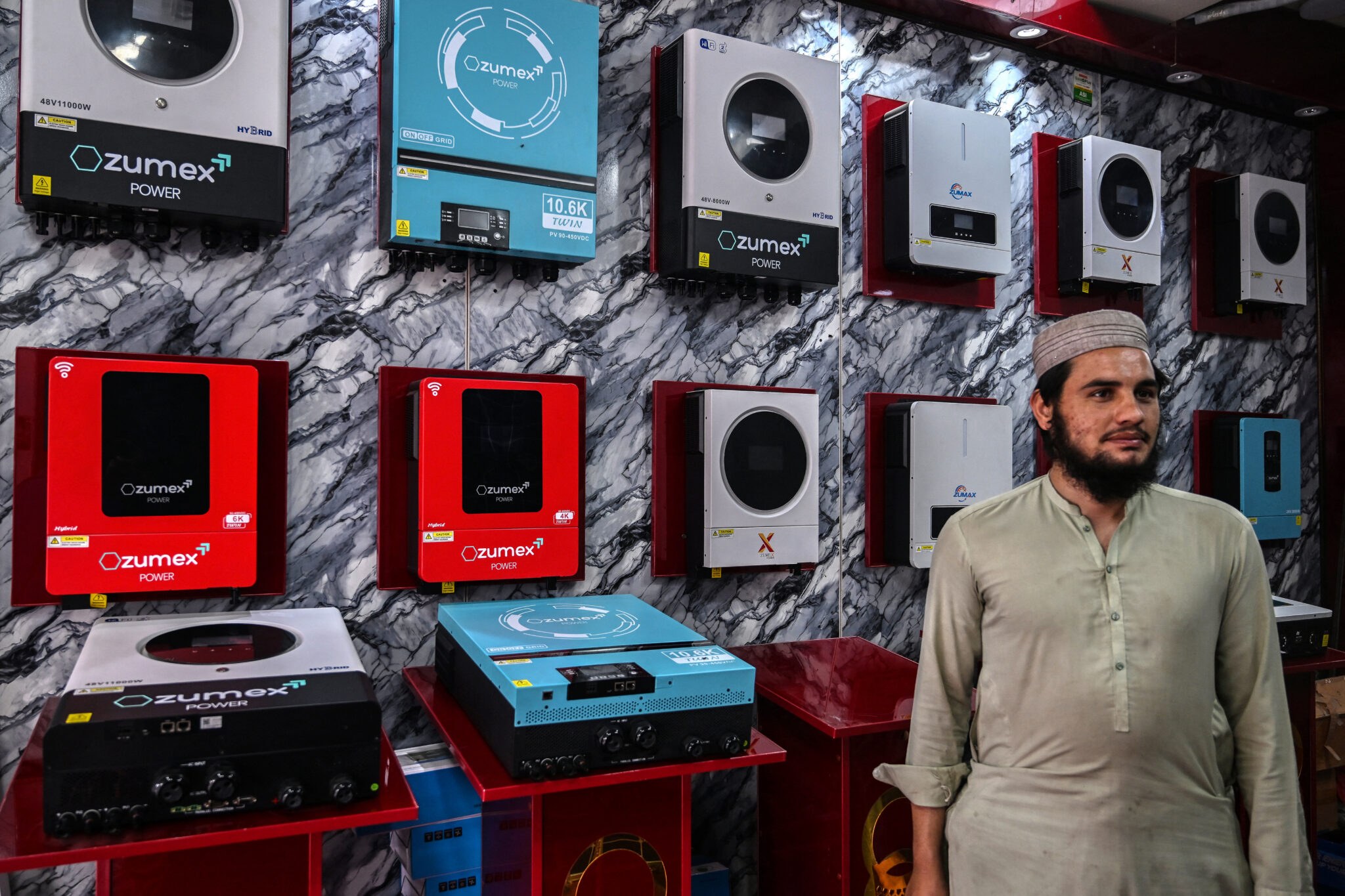
Pakistan's utilities plan to deploy utility-scale solar and wind facilities alongside battery storage to offset the high cost of fossil-fuel generation after dark. The country has also reduced the rates grid operators pay households for surplus solar power.
Eskom's Marokane is pursuing large electricity consumers such as data centers and bitcoin miners to reverse declining power sales, while introducing new pricing designed to support lower- and middle-income households and businesses. He cautions, however, that network investment costs to support renewables "is going to find its way into the electricity price."
Eskom has waived registration fees for new solar installations partly to gain visibility over deployments. "I think we will see more uptake [of solar]," Marokane says. "It's not going to stop."